5 ways to present a proposal that builds client confidence
Client confidence rarely comes from how calm you look in the room. It comes from evidence in the proposal: proof you understood the problem, a process they can follow, a price they can read and a next step they can take.


Understanding
Lead with the client's problem, not your portfolio
Open the proposal and the meeting with the client's problem in their own words, then show what is at stake, before a single slide about your studio.
The fastest way to build confidence is to prove you listened. Start by restating the brief in the client's own words: what they want to change, why now, and what happens if nothing changes. A client who hears their problem described better than they described it stops wondering whether you understand them and starts wondering how you would solve it.
Many proposals do the opposite. They open with the agency: the founding story, the client logos, the awards, the philosophy. That feels like confidence from the inside. From the client's chair it reads as a studio talking about itself, and the opening minute, when attention is highest, is spent on the wrong subject. Put your story later, where it serves as proof. Open with theirs.
Why a proposal has more readers than you think
13 people
within an organization are involved in the buying decision, on average
81%
of buyers express dissatisfaction with their chosen providers
Map who will read the proposal
Forrester's research shows how crowded the decision is: on average, 13 people within an organization are involved in the buying decision, and 89% of purchases involve more than a single department. Its Buyers' Journey Survey adds that 93% of B2B buyers participated in a buying group rather than deciding alone.
A studio client is usually a smaller organization, but the roles are the same. Someone holds the budget and asks whether the investment is worth it. Someone owns the project day to day and asks whether you will be easy to work with. Someone guards the brand or the technology and asks whether you will get the details right. Each of them reads your proposal looking for an answer to a different worry.
Write for all of them. Give each main worry its own block, so a reader can find the answer without reading everything else.
Who reads a creative proposal, and what they need to see
The economic buyer
Usually a founder, CEO or finance lead. Needs the outcome, the total investment and the risk, stated plainly near the top.
The day-to-day owner
Often the marketing or brand manager who briefed you. Needs the process, the timeline and how much of their time the project takes.
The brand or technical lead
A design lead, head of product or developer. Needs proof that you handle their constraints: systems, platforms, accessibility, rollout.
The quiet influencer
Someone who never joins the calls but whose opinion counts. Needs a summary short enough to read between meetings.
Name the cost of standing still
Studios rarely lose deals only to a competitor. They often lose them to indecision.
April Dunford makes the point in her guide to building a sales pitch: companies that stuck with the status quo usually did not decide it was better than the other options.
That is why the opening of your proposal should make the status quo visible. Describe what it costs the client to keep the old identity, the slow website or the inconsistent campaign: in missed opportunities, internal friction, the launch that will look dated. You are not inventing urgency. You are helping the client see the decision clearly enough to make it.
Proof
Show your process and proof before you show your price
Show matching case studies, the named team and a clear process before the investment section, so the price arrives as the cost of a result the client already believes in.
Confidence is a judgment about risk. The client is asking a simple question: will this studio deliver what it promises, on time, without drama? Your proof should answer that question, not show off. Pick case studies that match the client's situation (their sector, their size, their kind of problem), even if they are not your showiest work. A modest project that solved the same problem beats a showpiece from a different world.
For each case study, show the before, the decision you made and what changed afterwards. Keep it visual and brief: a strong image, a line on the problem, a line on what you did, a line on the outcome the client saw.
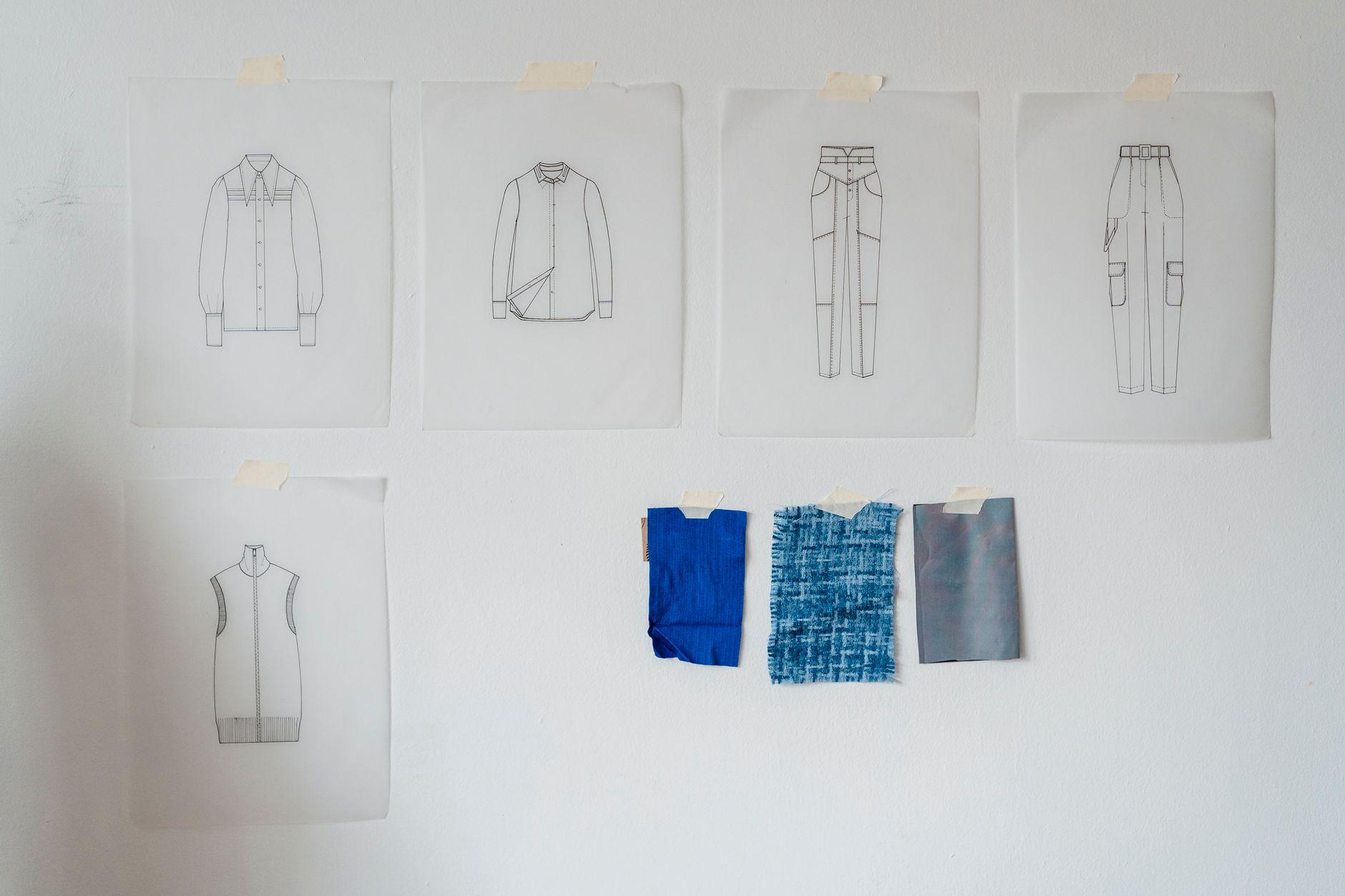
Let the work carry the proof

Show the process as a timeline
A process the client can see is a process they can trust. Lay it out as phases with milestones: discovery, concepts, refinement, delivery. Mark the moments where the client is involved, such as workshops, presentations and approvals, so they can plan their own time. Say what happens at each review and how decisions get made. A clear process also answers a question clients rarely ask out loud: what will working with you feel like?
Introduce the people who will do the work
Clients buy people, not logos. Name the team members who will actually work on the project, with a photo, their role and a line on relevant experience. If the founder pitches but a junior designer delivers, say so and introduce the designer. Nothing erodes confidence faster than meeting a new team after the contract is signed.
Ways to lower the perceived risk
Offer references
Name a past client in a similar situation who has agreed to take a call, and say what they can speak to.
State outcomes plainly
Describe what changed for past clients in concrete terms, without inflating results or claiming credit for things you did not control.
Explain how scope changes work
Say what happens if the brief grows: how you flag it, how it is priced and who approves it before work starts.
Show your review points
Point to the moments where the client can steer the work, so they never feel locked into a direction they have not seen.
Investment
Make the price legible with a line-by-line breakdown
Present the investment as a few options with clear scope boundaries, annotate each line with what the client gets, and state assumptions, revisions, payment terms and exclusions up front.
A price the client cannot read is a price they cannot defend internally. The marketing manager who loves your proposal still has to explain the number to someone who never met you. Make that easy. Break the investment into lines, say what each line delivers, and state the assumptions behind it. A legible price shows you have thought through the work, and that is a form of proof in itself.
Options help more than discounts. When the client can choose between tiers with clear scope boundaries, the conversation moves from whether to work with you to how much of the project to start with.
Treat the investment section as a joint decision, not an opening bid. Write each option as something you would be glad to deliver, say who it suits, and leave the client room to choose without feeling steered.
Annotate every line
Here is an illustrative example: a brand identity proposal from a fictional studio, with three tiers and example prices. Each line carries a note on the doubt it settles. The client reads the scope, sees the boundaries and can pick a level of ambition without a call.
Example: brand identity investment, three tiers
Illustrative tiers and example prices for a fictional client, not real data.
| Line | Essentials | Signature | Complete | Doubt it settles |
|---|---|---|---|---|
| Discovery workshop and brand audit | Included | Included | Included | Will they understand our business? |
| Logo, colour and type system | Included | Included | Included | What exactly do we get? |
| Concept routes presented | 2 | 3 | 3 | Will we have a real choice? |
| Revision rounds per stage | 2 | 3 | 3 | What if we don't like it? |
| Brand guidelines | Starter guide | Full guidelines | Full guidelines | Can our team use it without you? |
| Website design and launch assets | Not included | Not included | Included | Is the rollout covered? |
| Example price | $12,000 | $24,000 | $38,000 | Is the price tied to scope? |
State assumptions, payment and exclusions
In this example, the studio adds a short terms block under the table. For the Signature tier, payment is split into a deposit of $9,600 on signing, $9,600 at concept approval and $4,800 on handover. The assumptions are written out: the client provides existing brand files and a single point of contact, feedback arrives within five working days of each presentation, and the project runs for eight weeks from kickoff. The exclusions are explicit too: photography, copywriting beyond taglines and print production costs are quoted separately.
None of this is fine print. It is the information a finance lead needs to say yes, written where they will find it.
Frame value without inventing returns
Tie the price to their goal
Connect each tier to the outcome the client named, such as a launch, a funding round or new stores, in their words.
Describe what changes
Say what the client will be able to do after the project that they cannot do now, without promising a revenue figure you cannot back.
Show the cost of delay
Remind the client what waiting costs, such as a launch with a dated brand or another season of inconsistent campaigns.
Keep the total visible
Show the total for each option clearly, so nobody has to add up lines or guess at extras.
Delivery
Walk the client through the proposal in a timed, interactive meeting
Should you send a proposal before or after presenting it? Present it live first, then send the link right after the meeting, and use view tracking to time your follow-up.
Sending the proposal first invites the client to jump to the price without the context that makes it make sense. Walking them through it live lets you tell the story in order: their problem, your approach, your proof, the investment, the next step. Send the link straight after the meeting so they can share it with the people who were not in the room, and watch who opens it and where they spend their time.
Keep the meeting short and structured, and leave real time for questions. A proposal presentation is a conversation with a document in the middle, not a performance.
Use a timed agenda mapped to the proposal
Here is an example agenda for a proposal meeting of 45 minutes, mapped to the blocks of the proposal. The timings are illustrative; adjust them to the client and the size of the project.
Example: a 45-minute proposal walkthrough
| Minutes | Segment | Proposal block | What the client should leave with |
|---|---|---|---|
| 0 to 5 | Hook and problem recap | Opening summary | They feel understood |
| 5 to 15 | Approach and process | Approach and timeline | They can picture the project |
| 15 to 25 | Proof and team | Case studies and team | They believe you can deliver |
| 25 to 32 | Investment | Pricing tiers and terms | They understand the options |
| 32 to 37 | Next step and date | Approval block | They know what happens next |
| 37 to 45 | Questions | Any block | Their doubts are answered or noted |
Keep live and async consistent
The proposal the client reads afterwards should tell the same story you told in the room, in the same order and with the same numbers. Inconsistency between what was said and what was sent is where doubt creeps in.
McKinsey's research shows that almost 65 percent of B2B customers come away from the decision journey frustrated by inconsistent experiences across the channels they use.

Handle questions and objections in the room
Listen to the whole question before you answer, and pause before you speak. Answer directly, then stop. If you do not know, say so and promise a written answer by a set time, then keep the promise. Objections follow a simple pattern: acknowledge the concern, show the evidence that addresses it, reframe it if needed, and offer a way to reduce the risk, such as a smaller first phase or a review point.
Rehearse with a colleague who plays the sceptical finance lead. You are not practising composure; you are testing whether the proposal answers the hard questions. Every question your colleague asks that the document cannot answer is a block to add.
Common objections and how to answer them
The price is too high
Ask what they are comparing it to, then show which lines drive the cost and offer a smaller tier or a phased start.
The timeline is too long
Show where the time goes, point to the client review points, and say what could move faster if feedback is quick.
We need to think about it
Ask what would help them decide and who else needs to see the proposal, then agree a date to talk again.
We have worked with an agency that let us down
Acknowledge it, ask what went wrong, and show the parts of your process that prevent that specific problem.
Close
Close with a dated next step the client can say yes to
End every proposal and every meeting with a specific ask, a decision date and a next step that takes the client a minute, not a week.
A presentation that ends with "let us know what you think" hands the momentum back to a busy client. End instead with a concrete ask: approve the Signature tier by a named date so the project can start before the spring launch, or book the kickoff workshop. Make it specific enough to say yes to, and easy enough to do without another meeting.
Specific asks work better. Gong's analysis notes that specific CTAs outperform every other type of CTA, and its post-meeting template uses a CTA style that's 2x more effective than just asking for a meeting.
Follow up while the meeting is fresh
Send answers to the open questions soon after the meeting, along with the proposal link and a short recap of what was agreed. Keep the next meeting on the calendar before you leave the room if you can.
When traveling to meet a client, we've found it works great to request a follow-up meeting within 24 hours of the first one (schedule both at the same time upfront)
Make acceptance happen inside the proposal
The last step should take the client a minute. This is where Formlio fits. Proposals in Formlio are web documents built from blocks, so the client can compare your tiers in an interactive pricing block, toggle optional add-ons and watch the total update, then approve with a slide-to-approve button or sign with an e-signature on the same page. After you hit send, instant notifications and section-level analytics show who opened the proposal and which sections they read, so your follow-up can address the investment section the finance lead lingered on, or the case study the CEO skipped.
A PDF goes into a black box. A Formlio document reports back: who opened it, what they read, when they signed.
A closing checklist
A specific ask
Name the tier or the first step you recommend and say why it fits their goal.
A decision date
Tie the date to something real on the client's side, such as a launch, a board meeting or a season.
A low-friction next step
Let the client approve or book the kickoff inside the proposal, without printing, scanning or another call.
A follow-up plan
Say when you will send answers to open questions and when you will check in, then do it.
Questions
Frequently asked questions
Present it live first, then send the link straight after the meeting. Presenting first lets you tell the story in order, and sending after lets the client share it with people who were not in the room.
Keep it under an hour, with a clear agenda and real time for questions. Spend the opening on the client's problem, the middle on approach and proof, and the end on the investment and a dated next step.
A small number that match the client's sector, size and problem. Relevance beats volume: each case study should show the problem, what you did and what changed for that client.
Ask what they are comparing it to, show which lines drive the cost, and offer a smaller tier or a phased start rather than a discount. A legible breakdown makes the conversation about scope, not about trust.
Bring something useful each time, such as answers to open questions, a relevant case study or a smaller first phase. With Formlio, section-level analytics show which sections the client read, so each follow-up can address what they actually looked at.
Yes. Share your screen and walk through the proposal in the same order you would in person, keep cameras on for the key moments, pause for questions, and send the link right after so the client can revisit it.
Template
Present proposals clients can say yes to
Build your next proposal in Formlio with tiered pricing, a clear process and approval on the page, then see what your client reads after you hit send.