Brighton
Architecture Statement of Work Template (RIBA Stages 3-4)
Architecture statement of work template for RIBA Stages 3 and 4: scope, BIM deliverables, programme and fees. Built for architects and clients.
Make it yours, in seconds
Every template is a starting point. Drag to shift colour, typography and layout — the live preview updates as you move.
Move the dots to shift colour, typography and layout. The preview updates live.
Get more from every document
Define exactly what you will design, deliver and charge for across RIBA Stages 3 and 4 before work starts. Stage deliverables, a gated programme, GBP fees and acceptance criteria are already structured for you.
Get the agreement signed on the page
Your client reads the scope, checks the price, and signs in the same document. No printing, no PDF attachments.
Assemble agreements from sections you trust
Pull in pricing, steps, and terms blocks, then save your tweaked versions to reuse on the next client deal.
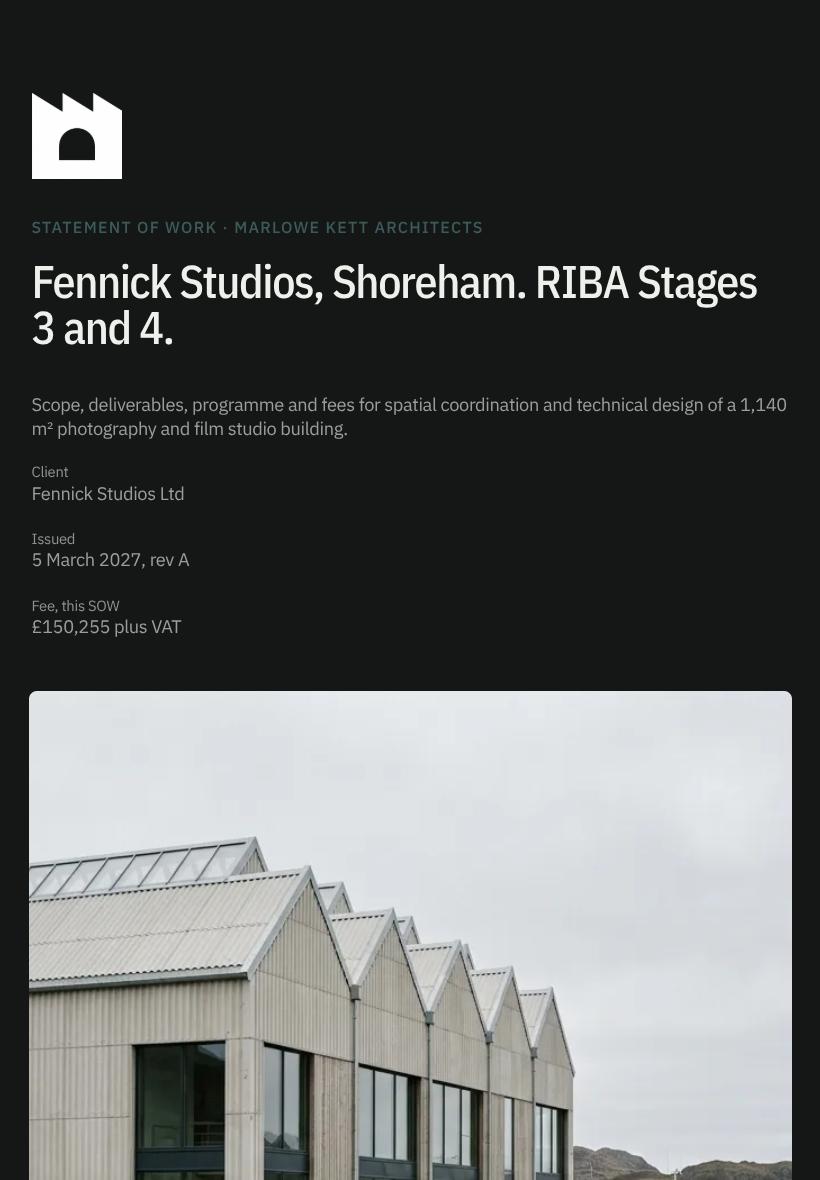
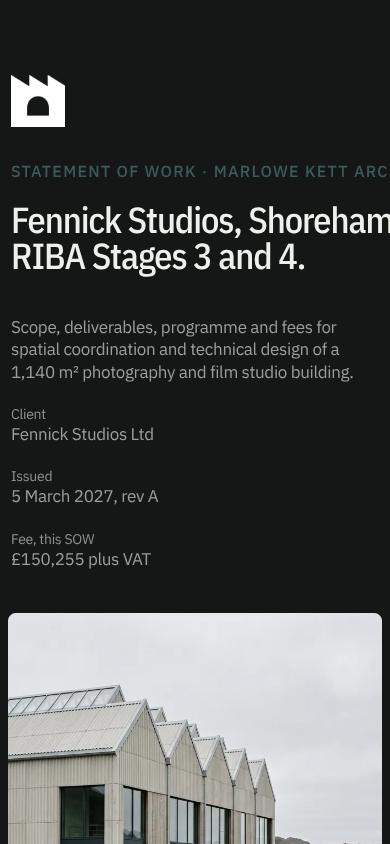
Terms read cleanly on any screen
Your client can review the breakdown and sign from a phone between meetings, with no layout rework from you.
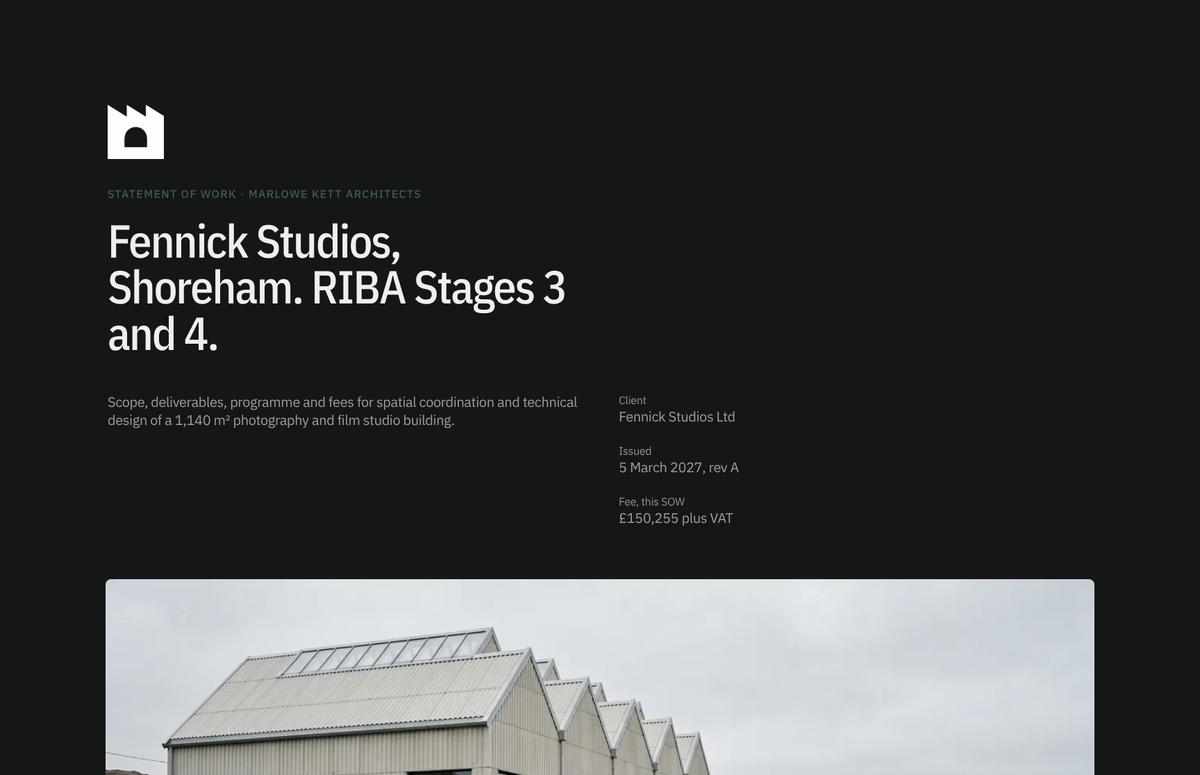

See which terms your client lingers on
Heatmaps show if they stalled on pricing or the accordion, so you know what to address in your follow-up.
Know the moment they sign
Get a ping when your client opens the agreement, leaves a comment, or signs, so you can reply while it's fresh.
Finalize terms with your team together
You, your producer, and legal can edit scope, pricing, and clauses in the same agreement at the same time.
See how every part fits
The document opens with a branded cover and a clear scope summary, then moves through deliverables, programme and fees, and closes with contract terms and signatures. Keep what fits, drop what doesn't, and reorder anything to match your project.
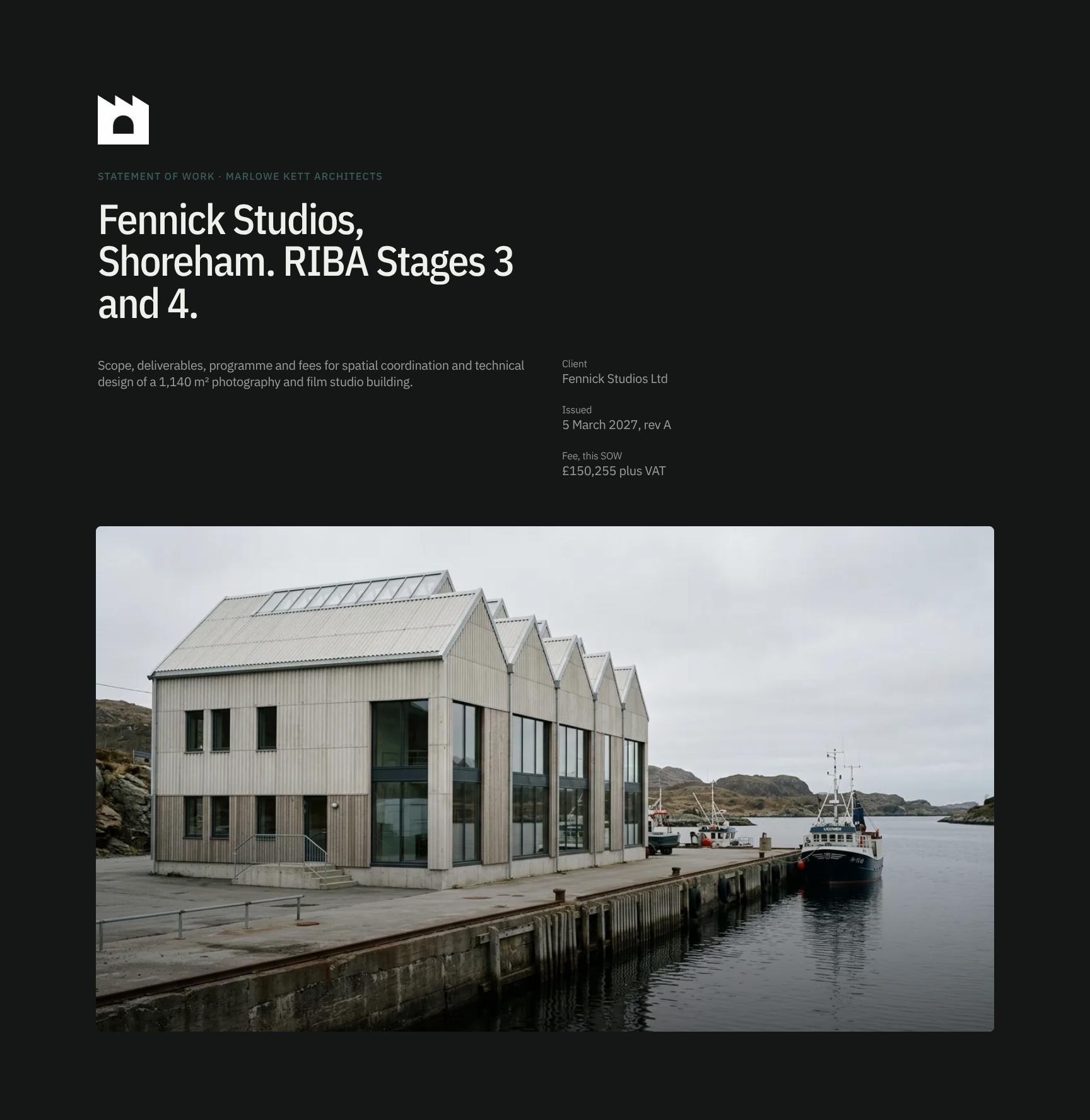
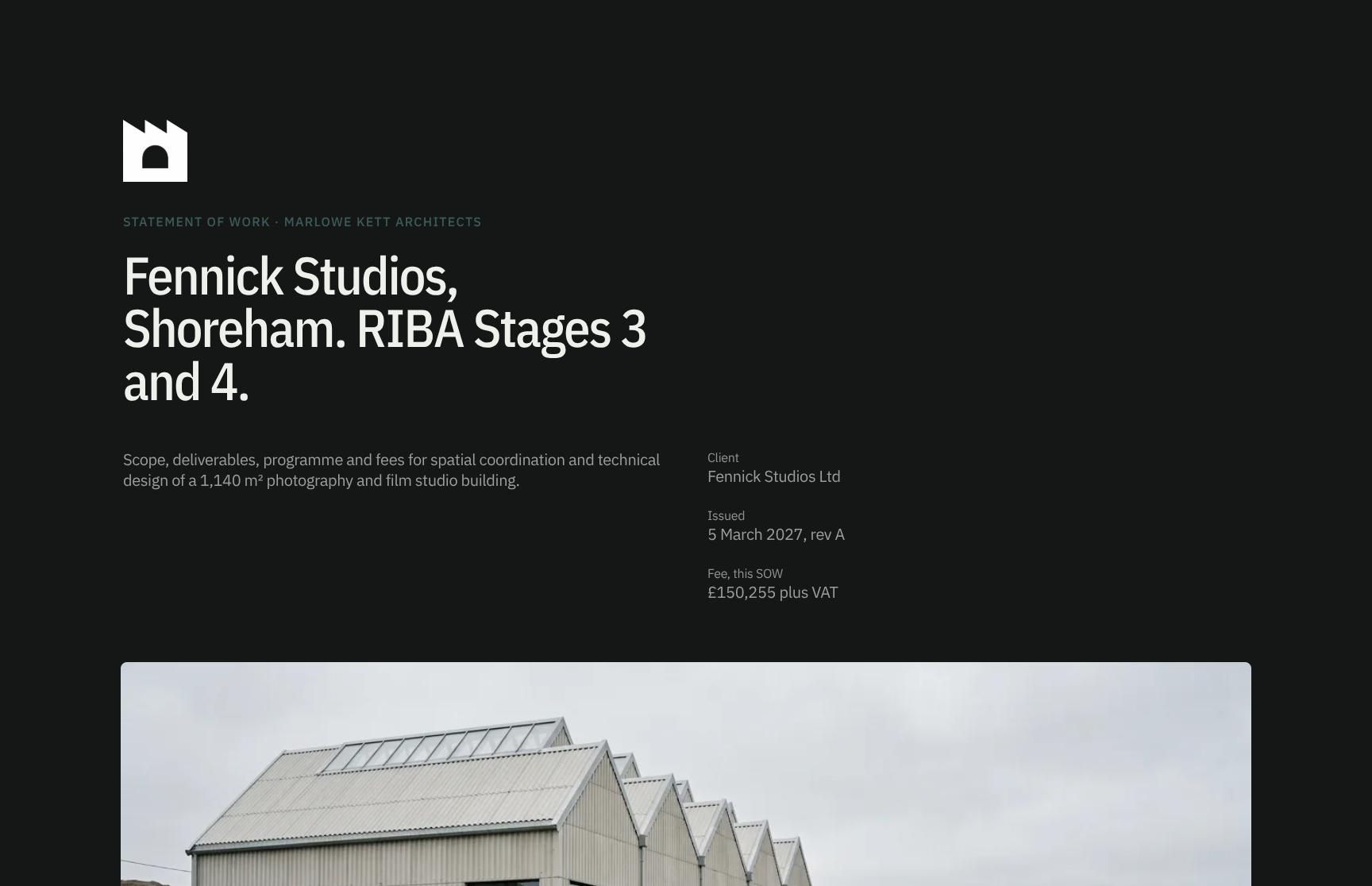
Branded Statement of Work Cover for RIBA Stages 3 and 4
Opens with the project name, client, studio location and RIBA stages covered, plus a one-line summary of scope, deliverables, programme and fees. Sets a professional first impression and orients the reader immediately.
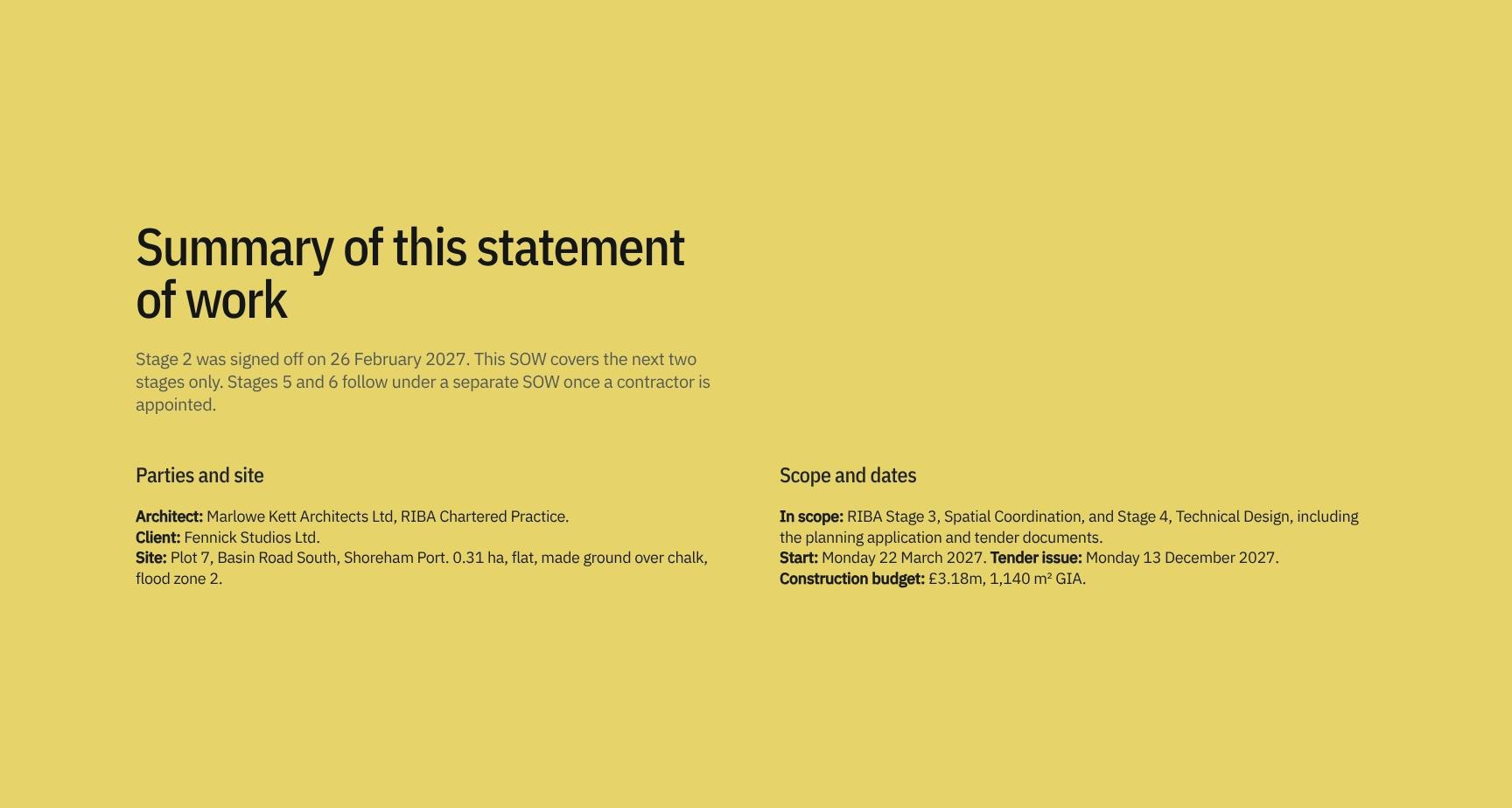
Executive Summary of Scope and Stage Boundaries
Summarises what this SOW covers, confirms Stage 2 sign-off, and clarifies that Stages 5 and 6 follow under a separate SOW. Removes ambiguity about scope so both parties start aligned.

Guiding Principle: Spatial Coordination to Buildable Design
A concise statement that Stage 3 fixes the building and Stage 4 makes it buildable. Gives clients a memorable way to understand the difference between the two stages.
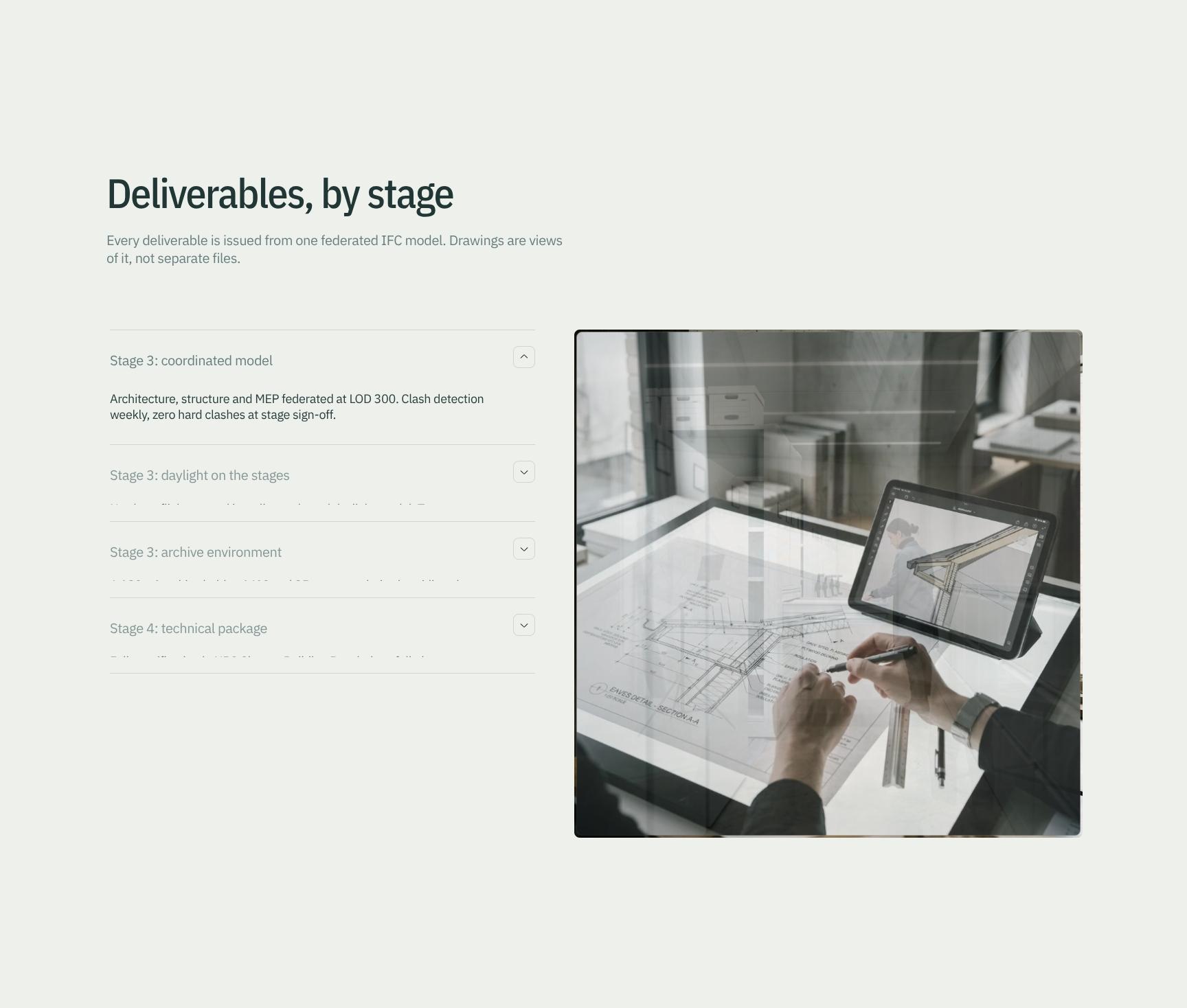
Stage-by-Stage Deliverables from a Federated IFC Model
Itemises every deliverable for Stages 3 and 4, all issued as views of a single federated IFC model. Clients see exactly what they receive and how coordinated BIM data prevents mismatched drawings.
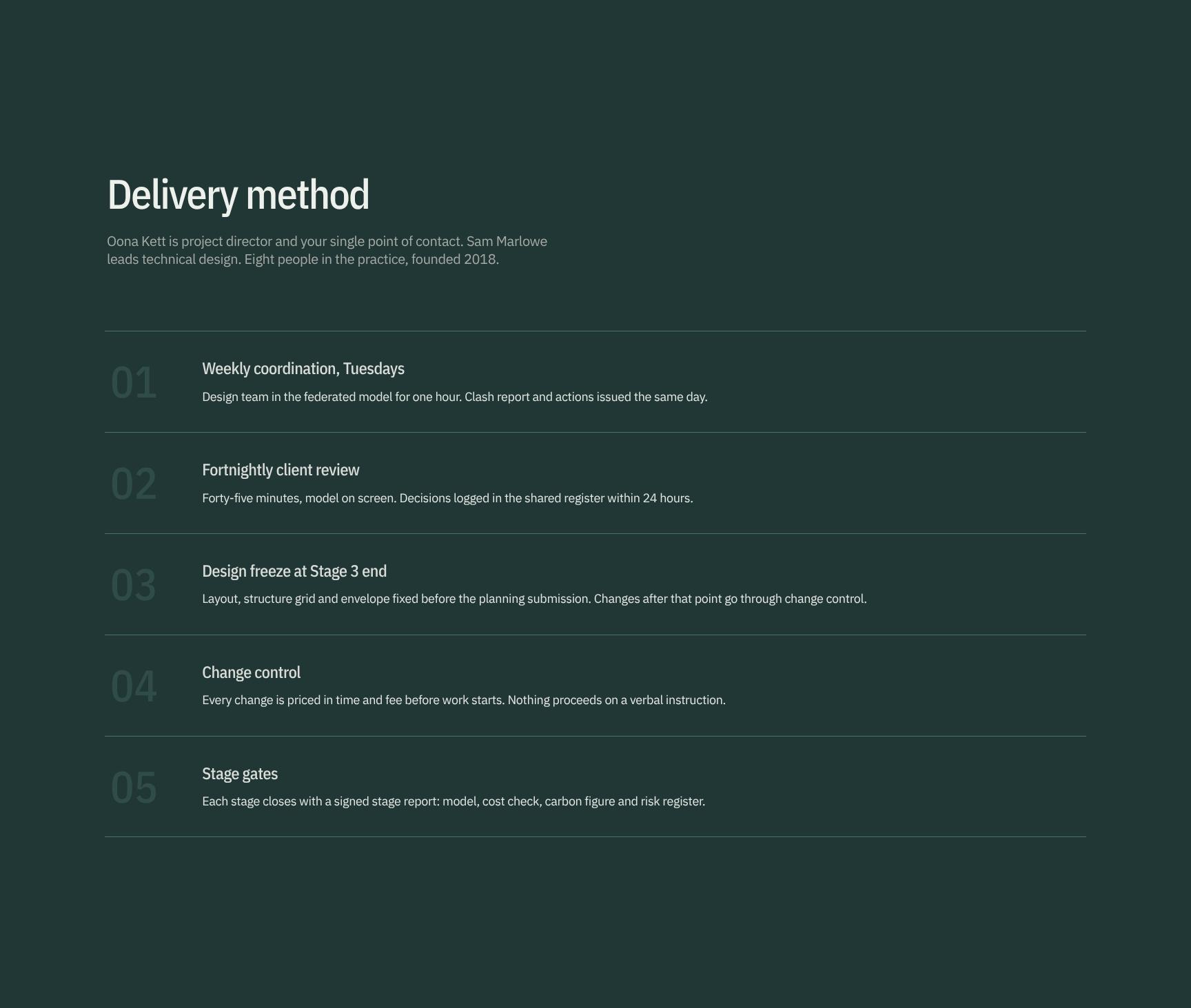
Delivery Method and Project Team Contacts
Introduces project director Oona Kett as single point of contact and Sam Marlowe as technical design lead, with context on the eight-person practice. Clear accountability and communication builds client confidence.
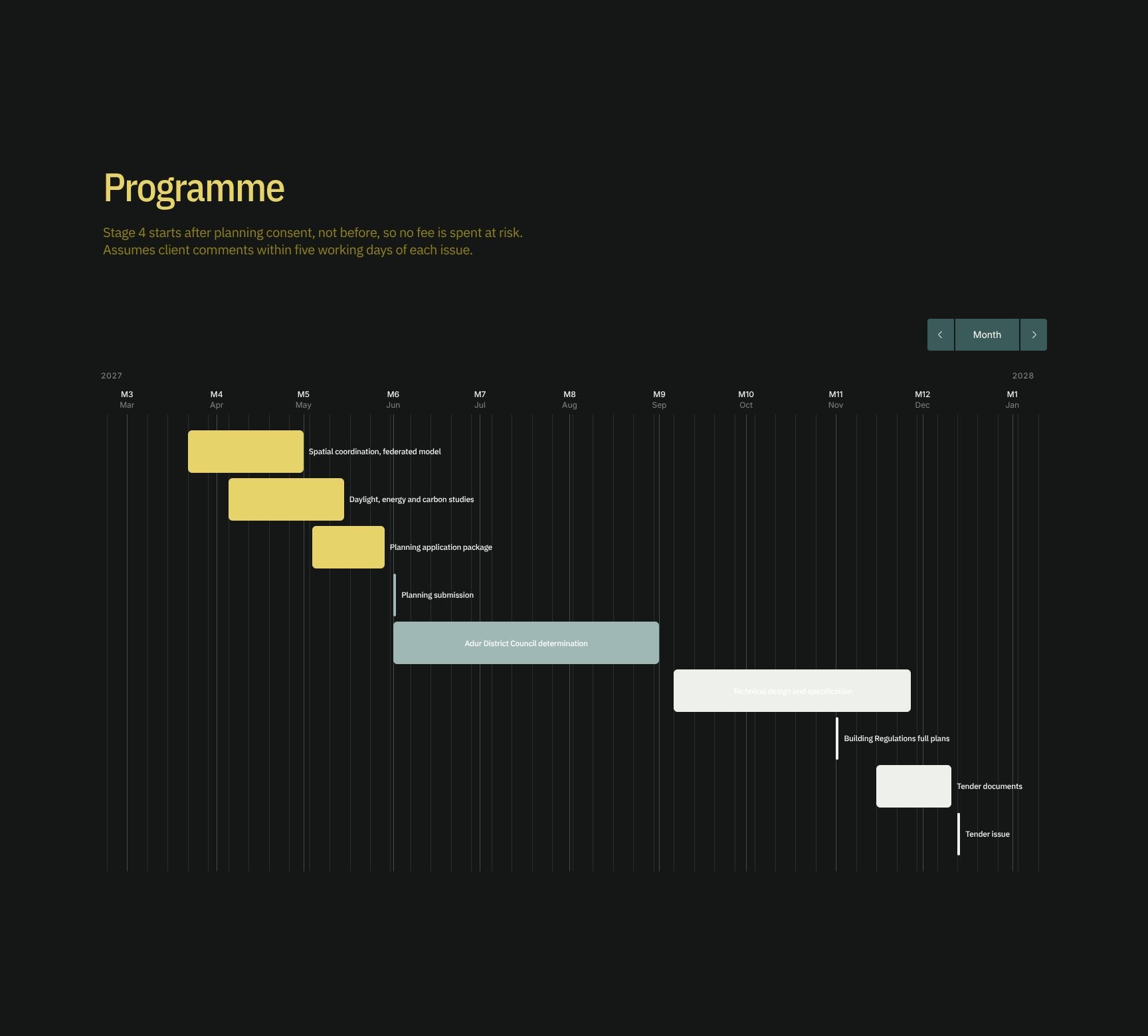
Project Programme with Planning-Consent Gating
Lays out the timeline for each stage, with Stage 4 starting only after planning consent so no fee is spent at risk. States the assumption of client comments within five working days to keep dates realistic.
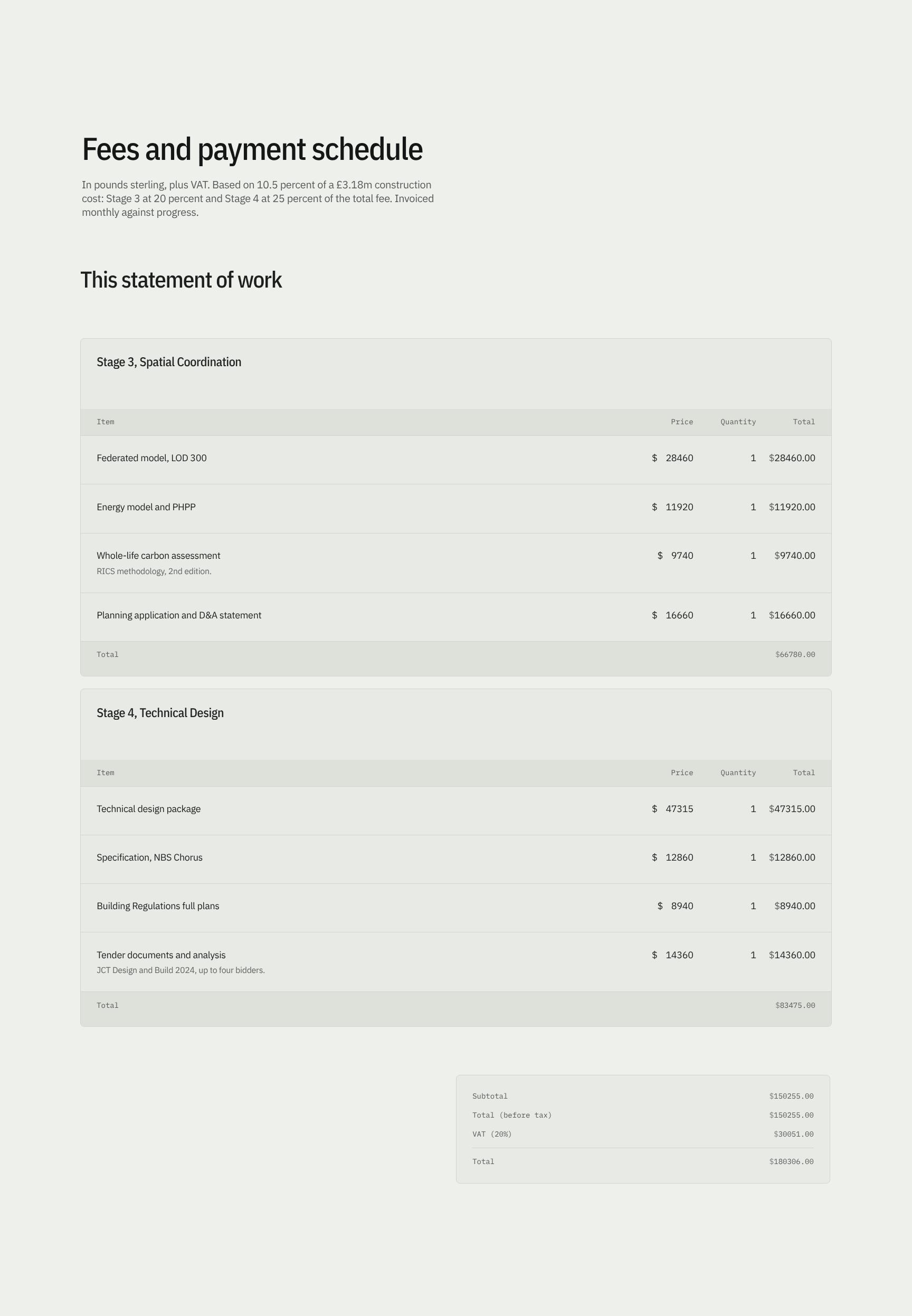
Architect Fees and Payment Schedule in GBP
Sets out fees in pounds sterling plus VAT, based on 10.5% of a £3.18m construction cost, split 20% for Stage 3 and 25% for Stage 4, invoiced monthly against progress. Transparent budgeting with no surprises.
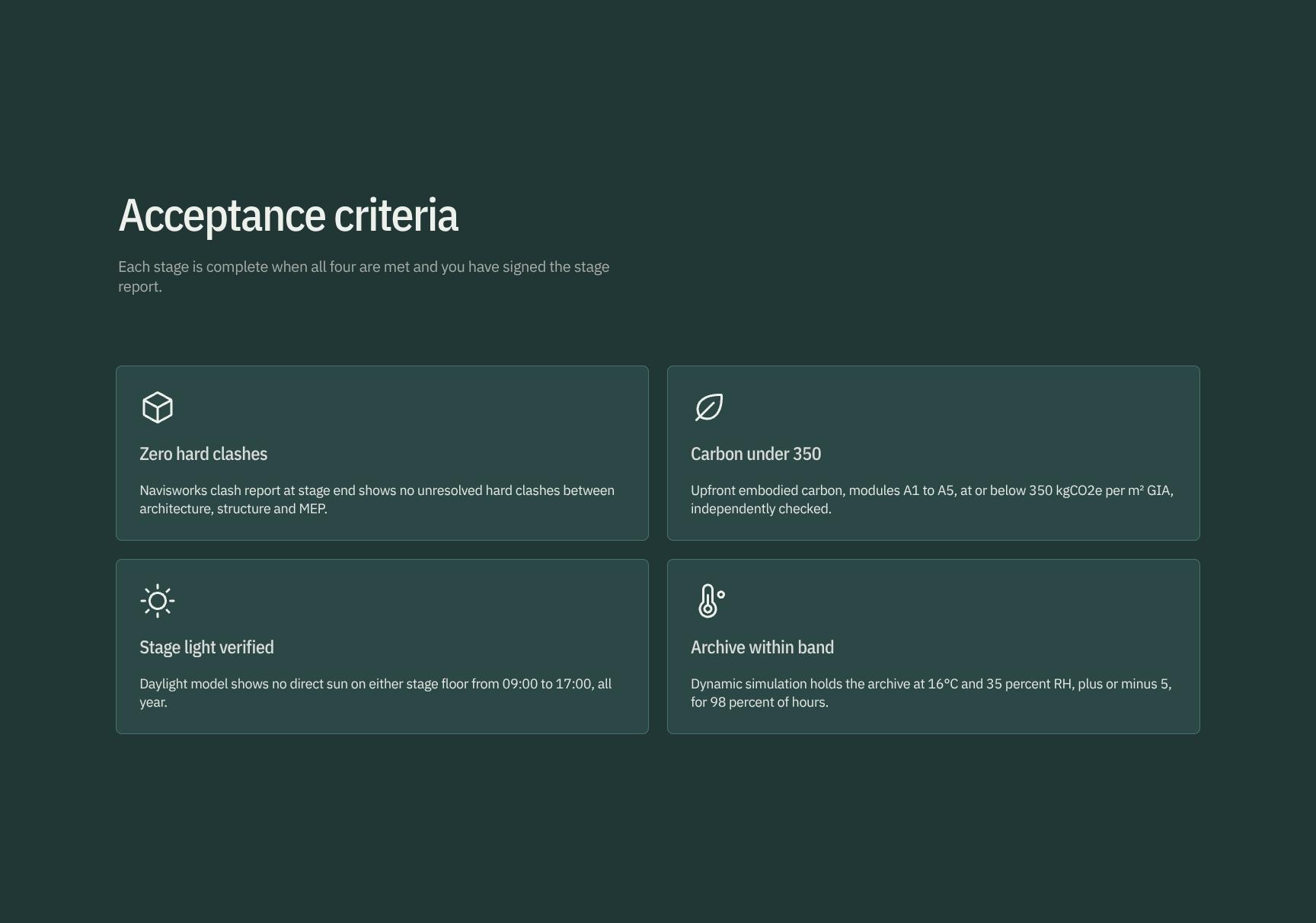
Stage Completion and Acceptance Criteria Checklist
Defines four measurable conditions for completing each stage, including a Navisworks clash report, and requires a signed stage report. Gives both sides objective sign-off criteria and avoids disputes.
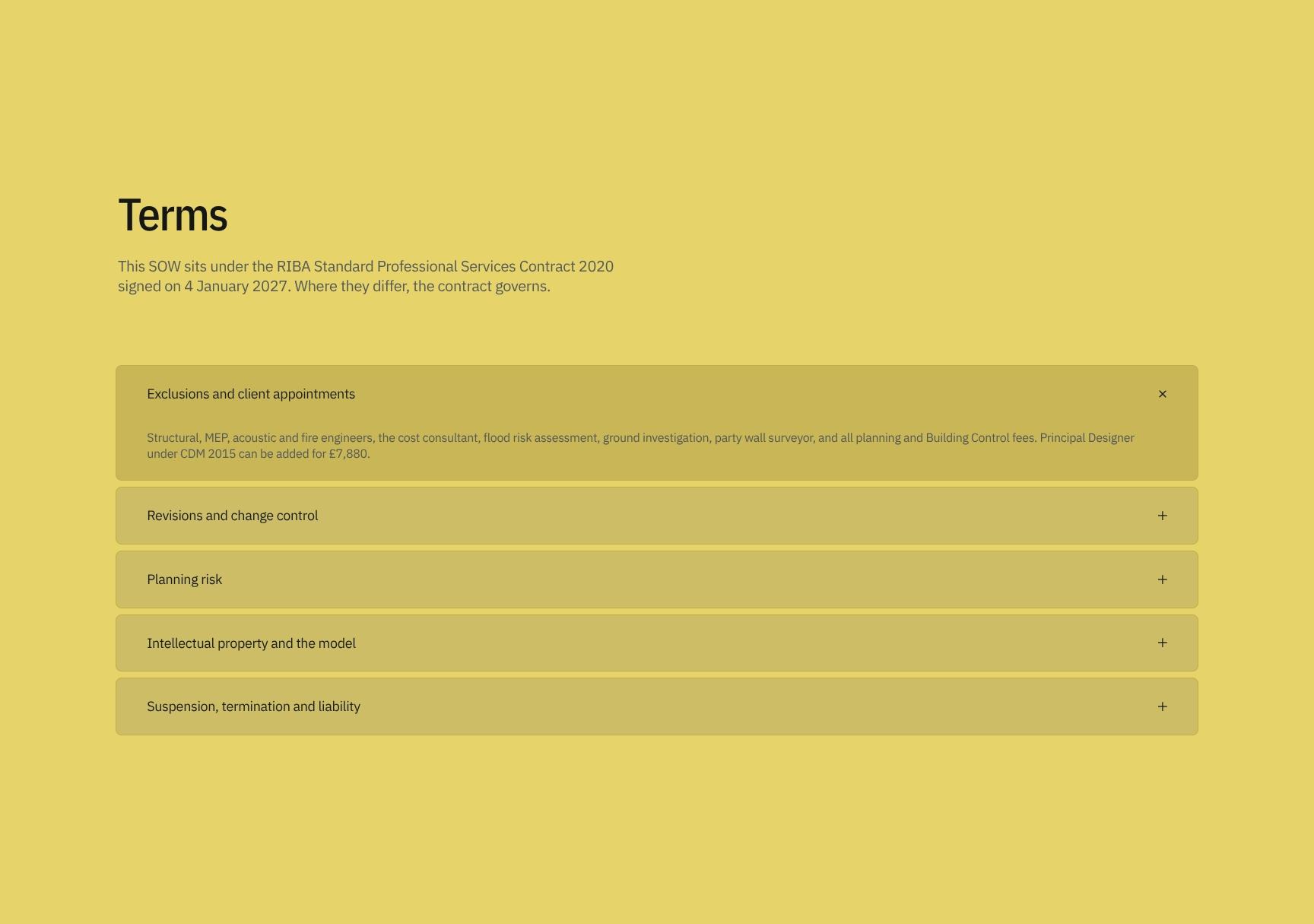
Contract Terms Under RIBA Professional Services Contract 2020
Expandable terms confirming the SOW sits under the RIBA Standard Professional Services Contract 2020, signed 4 January 2027, with the contract governing any conflicts. Keeps legal detail accessible and organised.
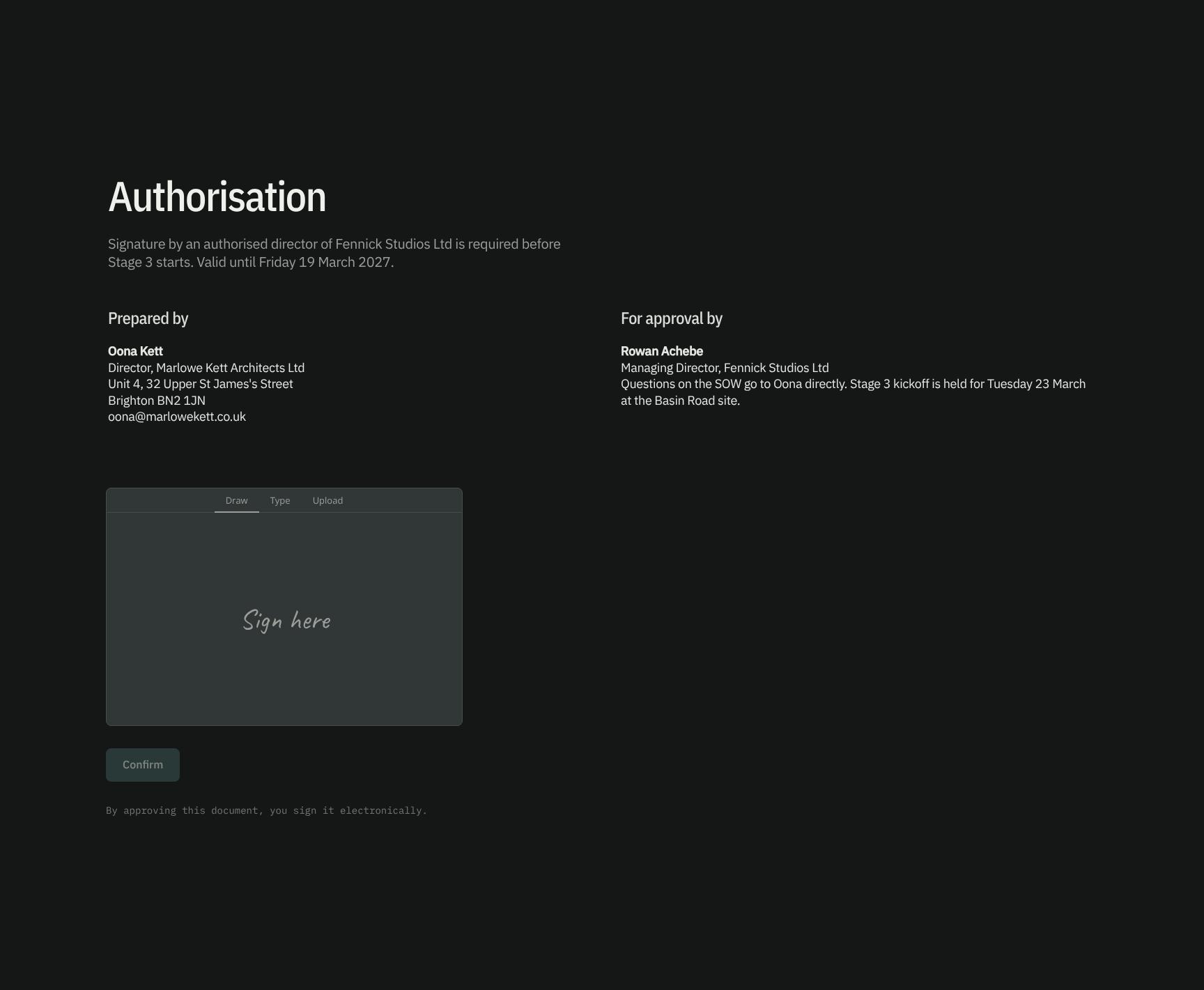
Authorisation and Director Signature Block
Captures the authorised director's signature for Fennick Studios Ltd, required before Stage 3 begins, with the offer valid until 19 March 2027. A clear close that turns agreement into action.
Find your answers
Answers to common questions about scoping, pricing and agreeing RIBA Stage 3 and 4 architectural services with design clients.
A solid agreement template should include a Cover, a Summary of the arrangement, the guiding Principle behind it, clearly defined Deliverables, the Method for carrying out the work, and a Programme setting out timelines and milestones. Together these sections define scope, expectations, and accountability for all parties. Keeping each section specific reduces disputes later.
Start with the Cover by adding party names, project title, and date. Then update the Summary and Principle to reflect your goals, list your exact Deliverables, and adjust the Method and Programme to match your workflow and schedule. Replace all placeholder text and remove any sections that do not apply.
Yes, the template can typically be edited in common word processors such as Microsoft Word or Google Docs and exported to PDF for sharing and signing. Edit in the original format first, then export a final PDF to preserve layout and formatting. Check that fonts and page breaks display correctly before sending.
Yes, the structure of Deliverables, Method, and Programme suits consulting, creative services, construction, and other project-based work. Adapt the wording and technical detail to your industry, such as specifying drawings, design files, or reports as deliverables. For regulated industries or high-value contracts, have a legal professional review the final document.
Most users can complete the template in 30 to 60 minutes if project details are already defined. The Deliverables and Programme sections usually take the longest because they require specific scopes and dates. Gathering this information beforehand speeds up the process.
Browse more architecture templates
More templates for architects writing proposals and agreements that set scope, fees and expectations with design clients.