Edinburgh
Temporary Venue Construction Proposal Template
Win festival contracts with a temporary venue build estimate template covering scope, exclusions, weather risk and build sequence for event organisers.
Make it yours, in seconds
Every template is a starting point. Drag to shift colour, typography and layout — the live preview updates as you move.
Move the dots to shift colour, typography and layout. The preview updates live.
Get more from every document
Win festival contracts by showing organisers exactly what you'll build, when, and what it costs. Scope accordions, a staged timeline, and an itemised estimate keep every assumption visible before anyone signs.
Get the yes without leaving the page
Your client reads the pricing, scrolls to the agreement, and signs right there. No PDF download, no printing, no waiting.
Assemble proposals from proven sections
Pull in a hero, steps, or pricing section, then save your best-performing ones and reuse them in your next pitch.
Your pitch looks sharp on any screen
Hero images, pricing tables, and testimonials hold their shape when a client opens your proposal on a phone between meetings.

See which section wins the deal
Heatmaps show who lingers on pricing, and session replays let you call while the client is still thinking it over.
Know the moment they open it
Get a ping when your client views the proposal, leaves a comment, or signs the agreement, so you reply while it's fresh.
Write the pitch with your whole team
Your designer tweaks the hero while you tighten the pricing breakdown, both in the same proposal, live.
See how every part fits
The proposal opens with the project and its scope, moves through your design thinking, build sequence, team and pricing, and closes on references and payment terms. Keep, drop, or reorder anything to fit the job.
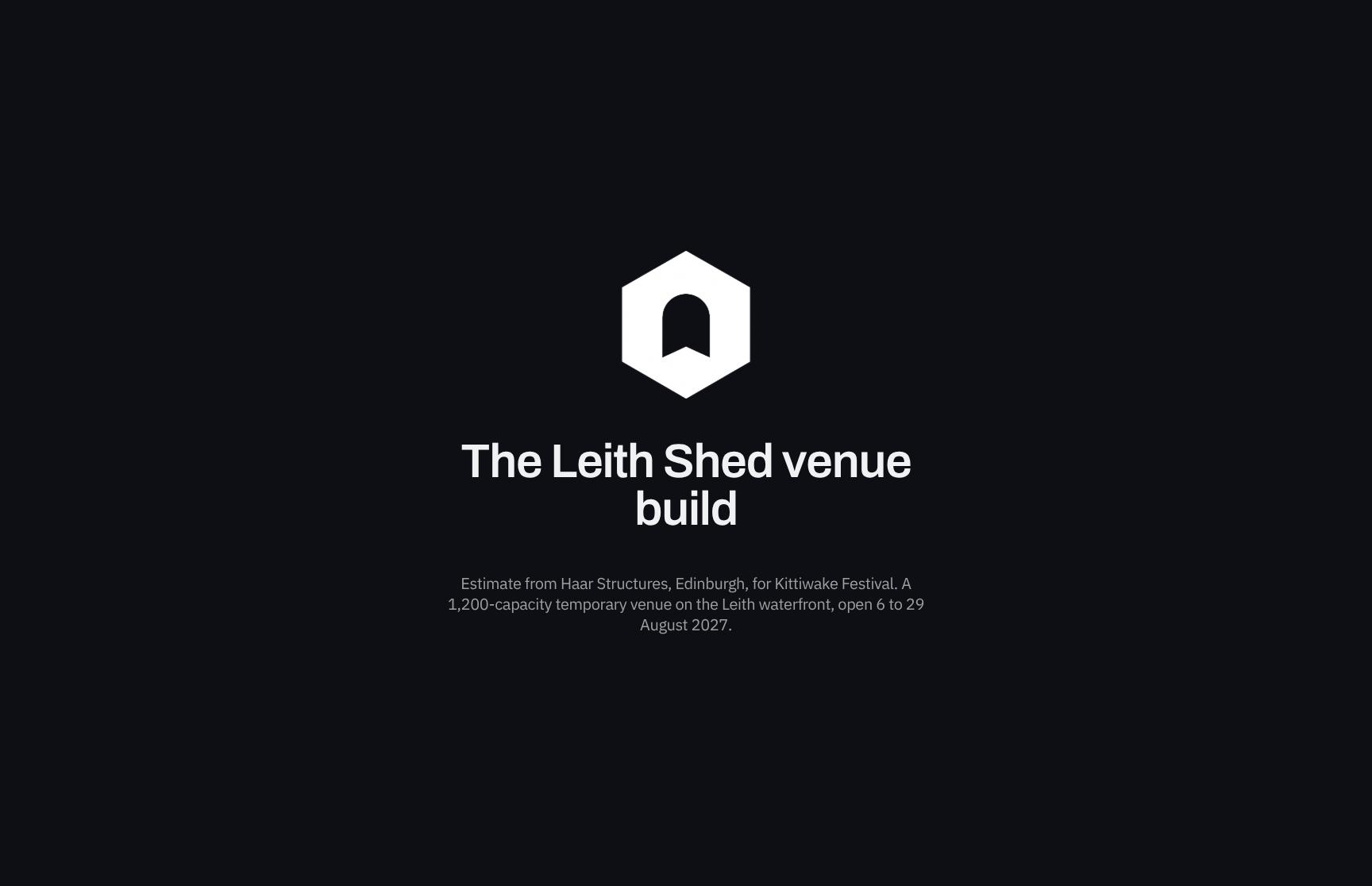
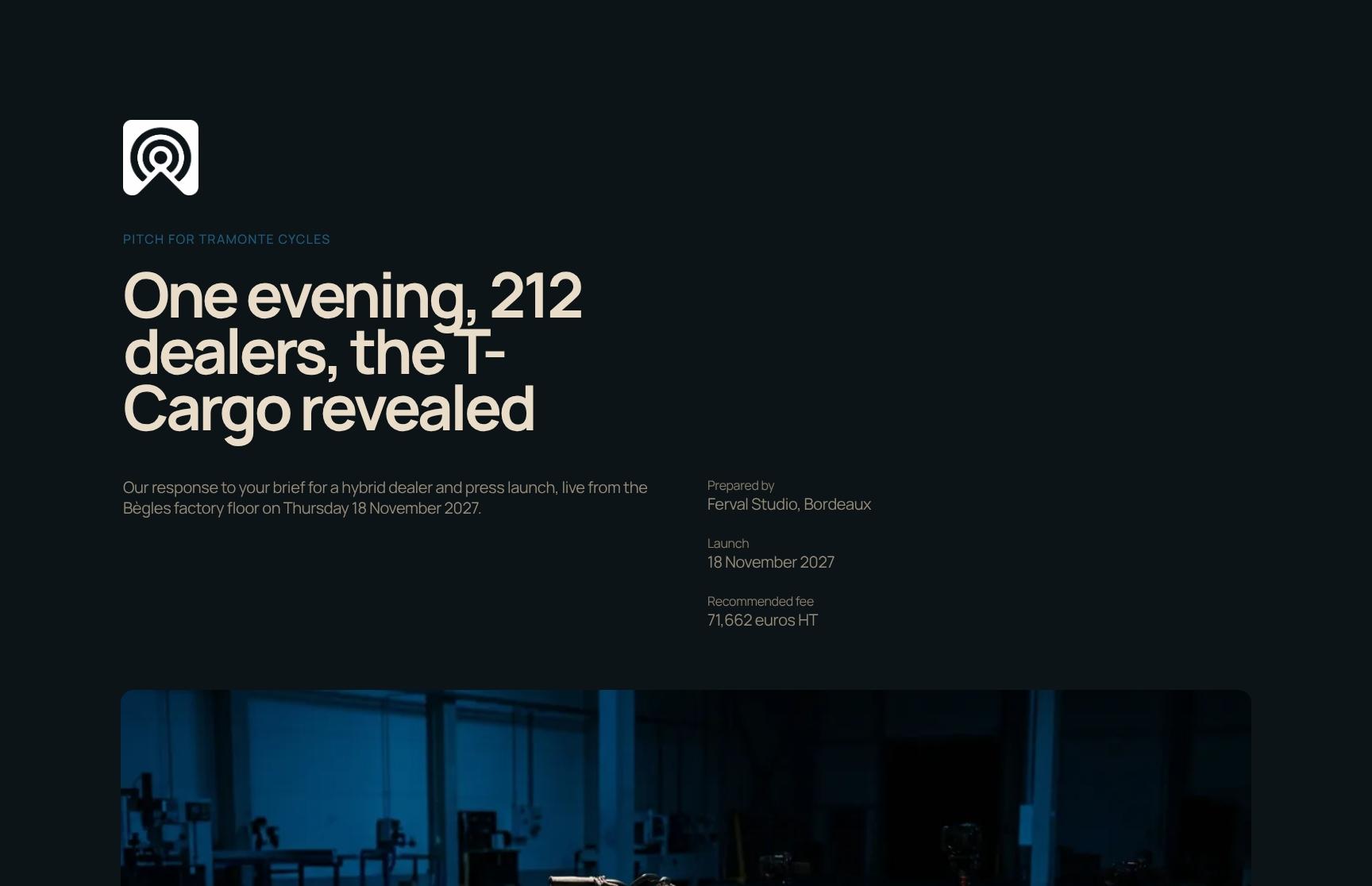
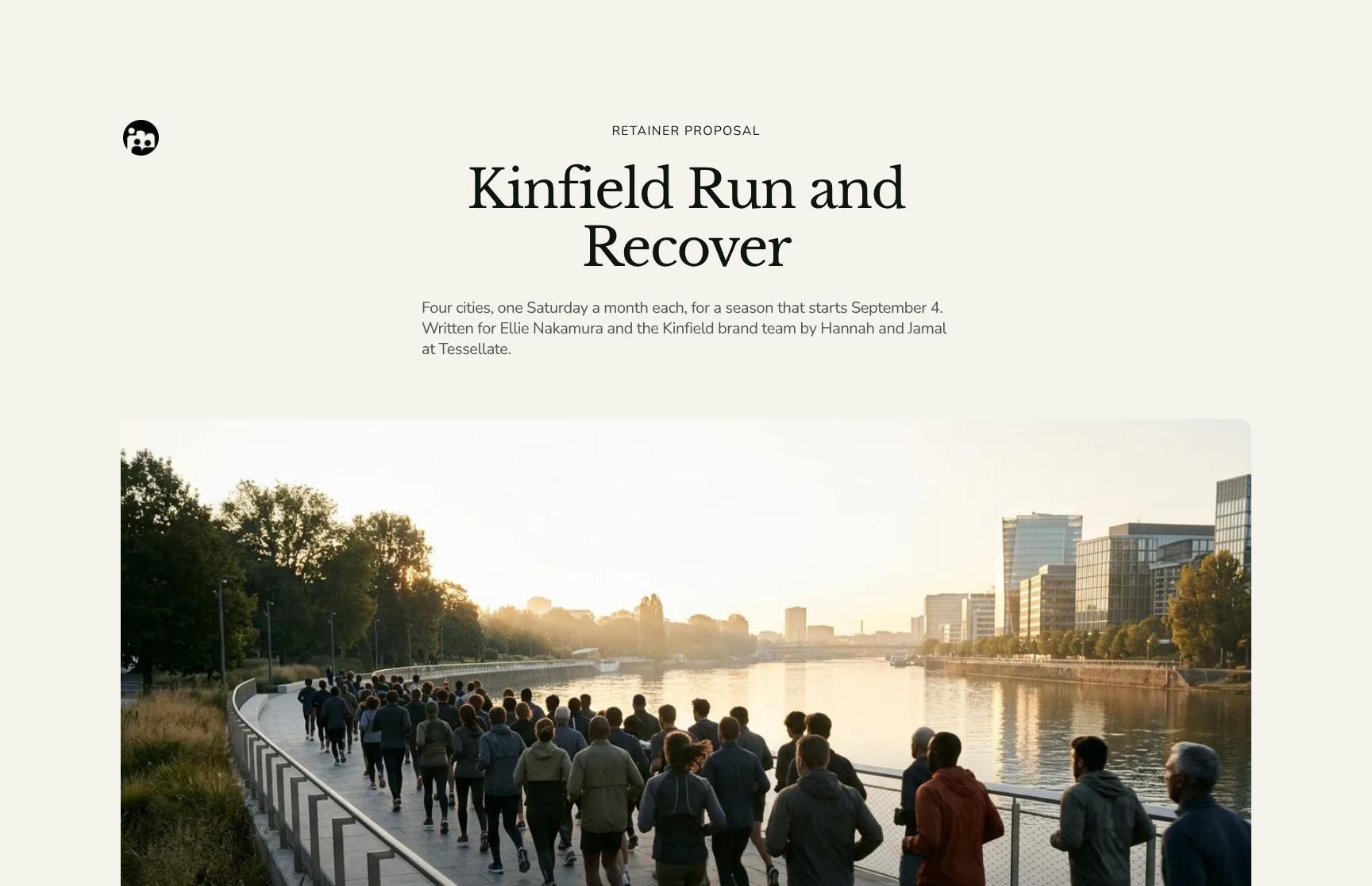
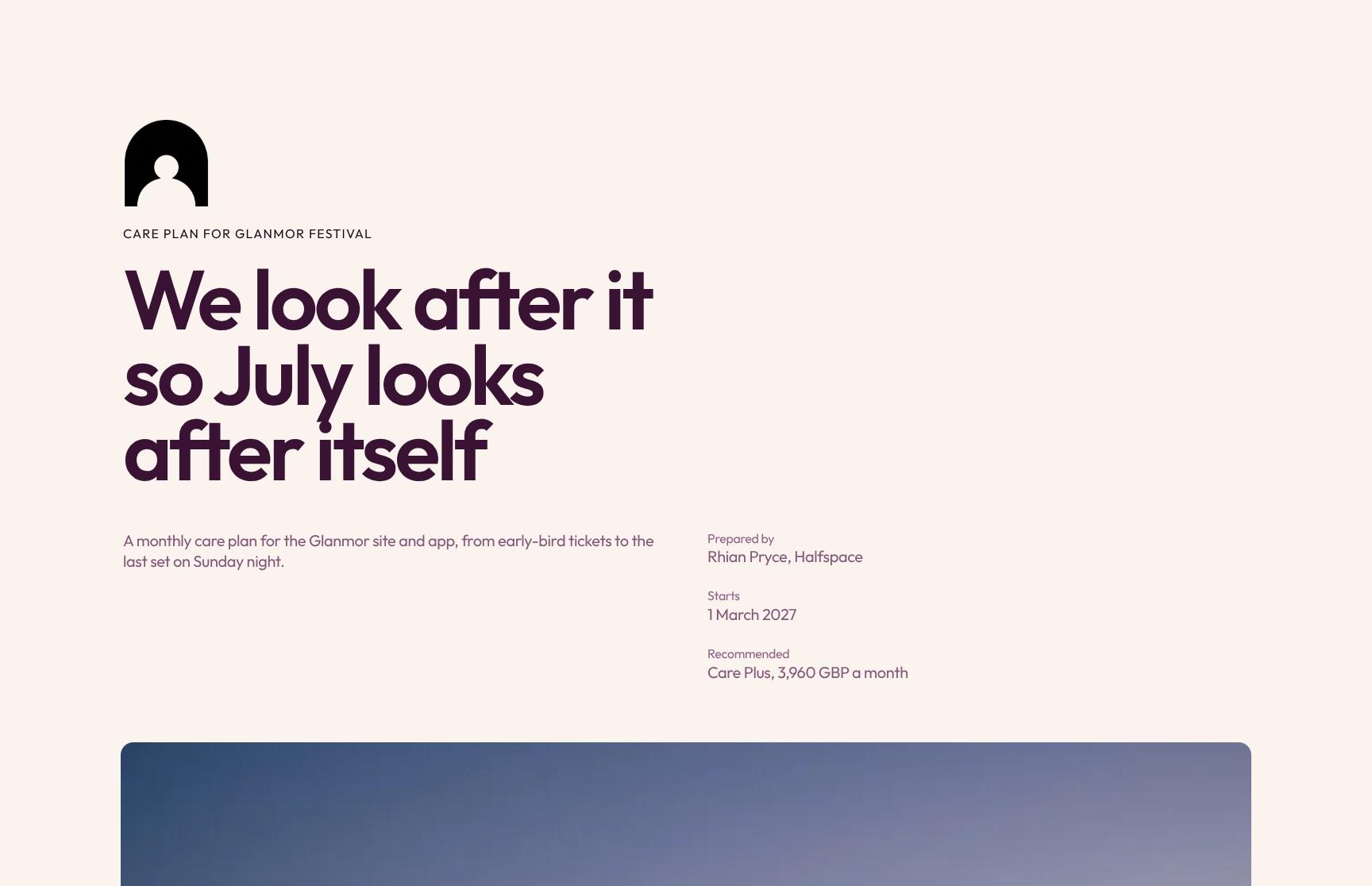
Venue Build Cover Page with Project Overview
Opens the proposal with the project name, client, 1,200-capacity Leith waterfront venue and 6 to 29 August 2027 run. Sets context immediately so the client knows exactly what the estimate covers.
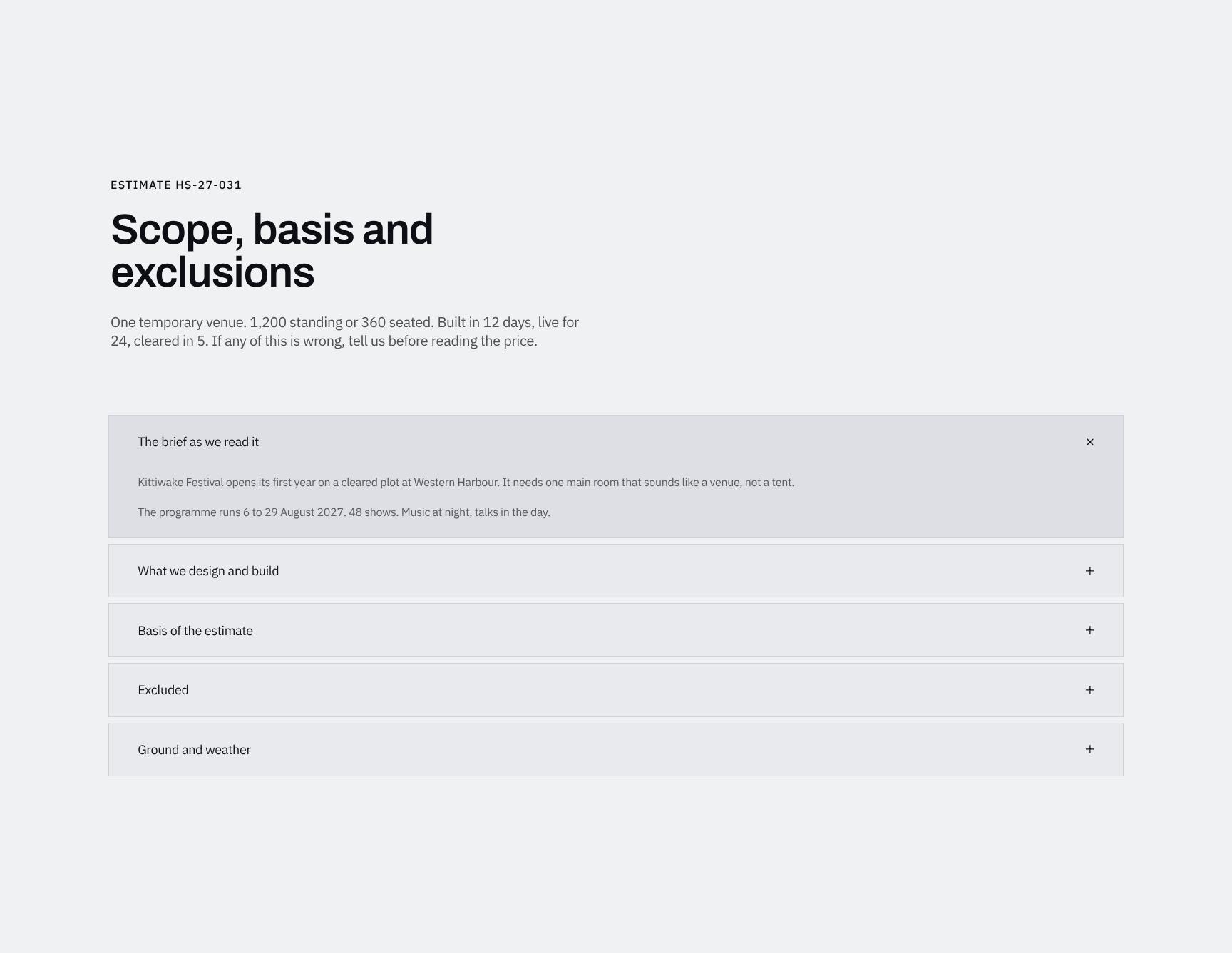
Scope, Basis and Exclusions Accordion
Expandable panels set out what is built, capacities, the 12-day build, 24 live days and 5-day clearance, plus assumptions and exclusions. Lets clients check scope before reading the price and avoids disputes.

Design Principle Statement for Temporary Venues
An animated text statement that frames the build philosophy: a temporary building should sound permanent. Gives the proposal a memorable point of view and signals quality before the detail begins.
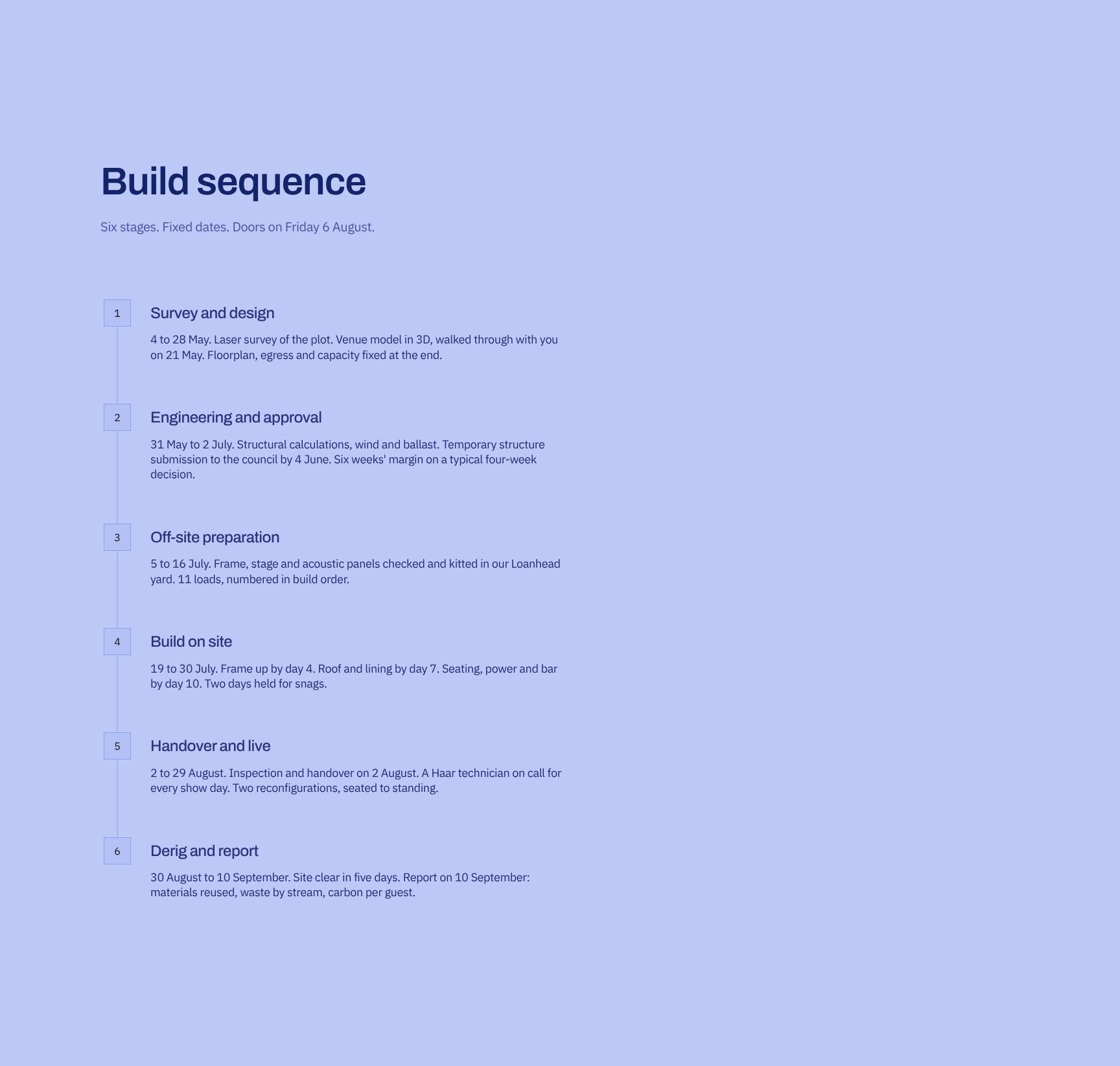
Six-Stage Build Sequence and Fixed Timeline
Walks through six stages from laser survey and 3D design in May to doors opening on Friday 6 August. Fixed dates make the schedule concrete and show clients how risk is managed along the way.
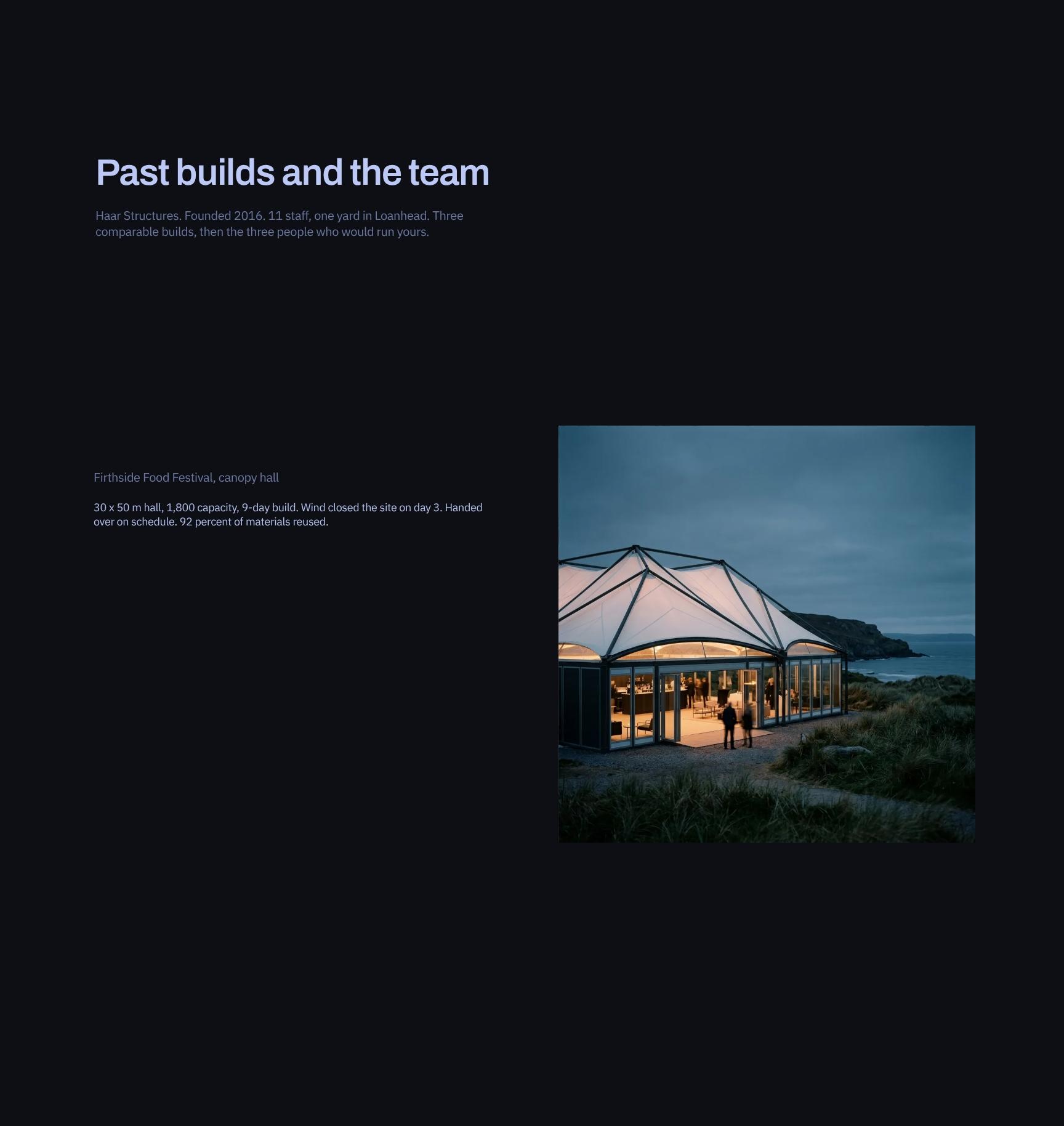
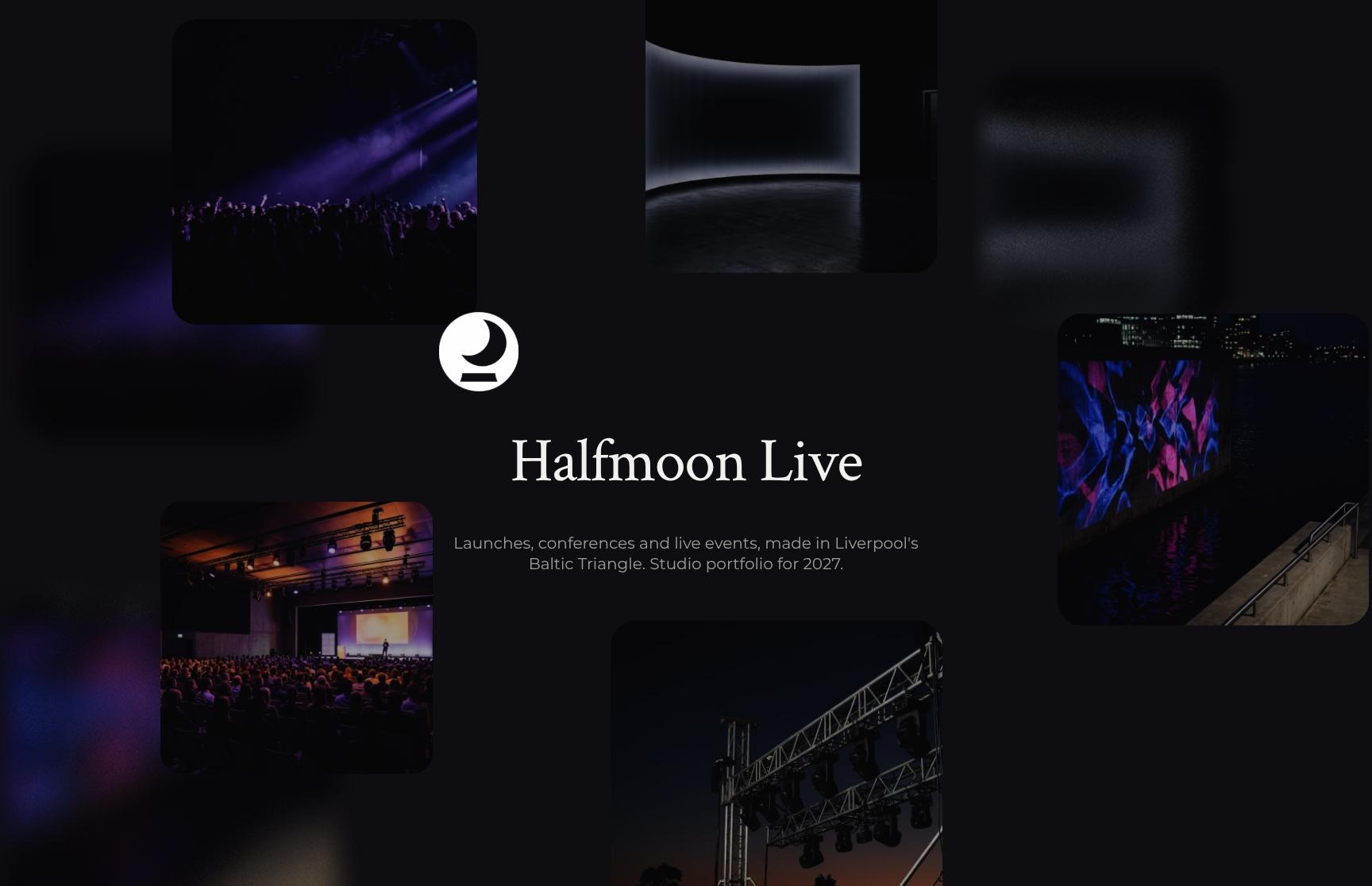
Past Builds and Delivery Team Profiles
Introduces Haar Structures, founded 2016 with 11 staff and a Loanhead yard, then three comparable builds and the three people who would run the project. Builds trust through proof of experience and named accountability.
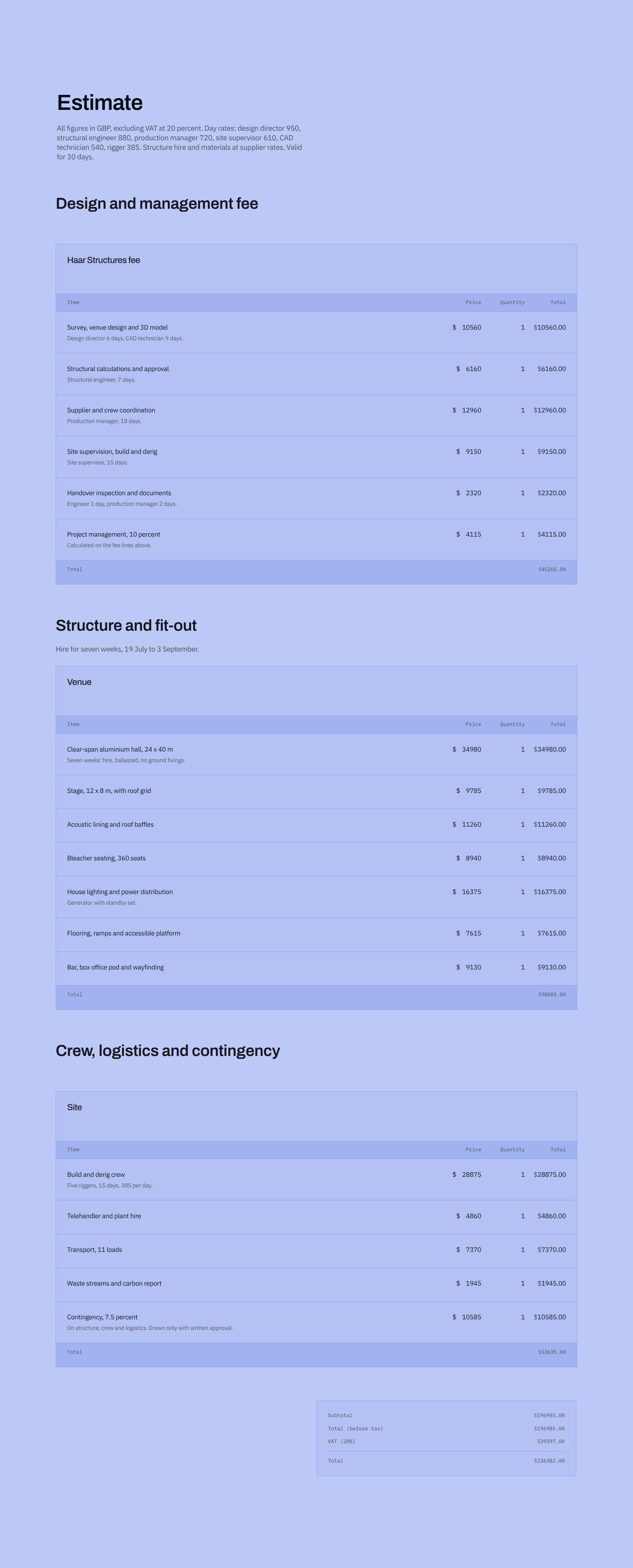
Itemised Estimate with Day Rates and Structure Hire
A transparent GBP estimate excluding 20 percent VAT, with day rates from designer to rigger plus structure hire costs. Clear line items let clients compare, audit and approve the budget with confidence.
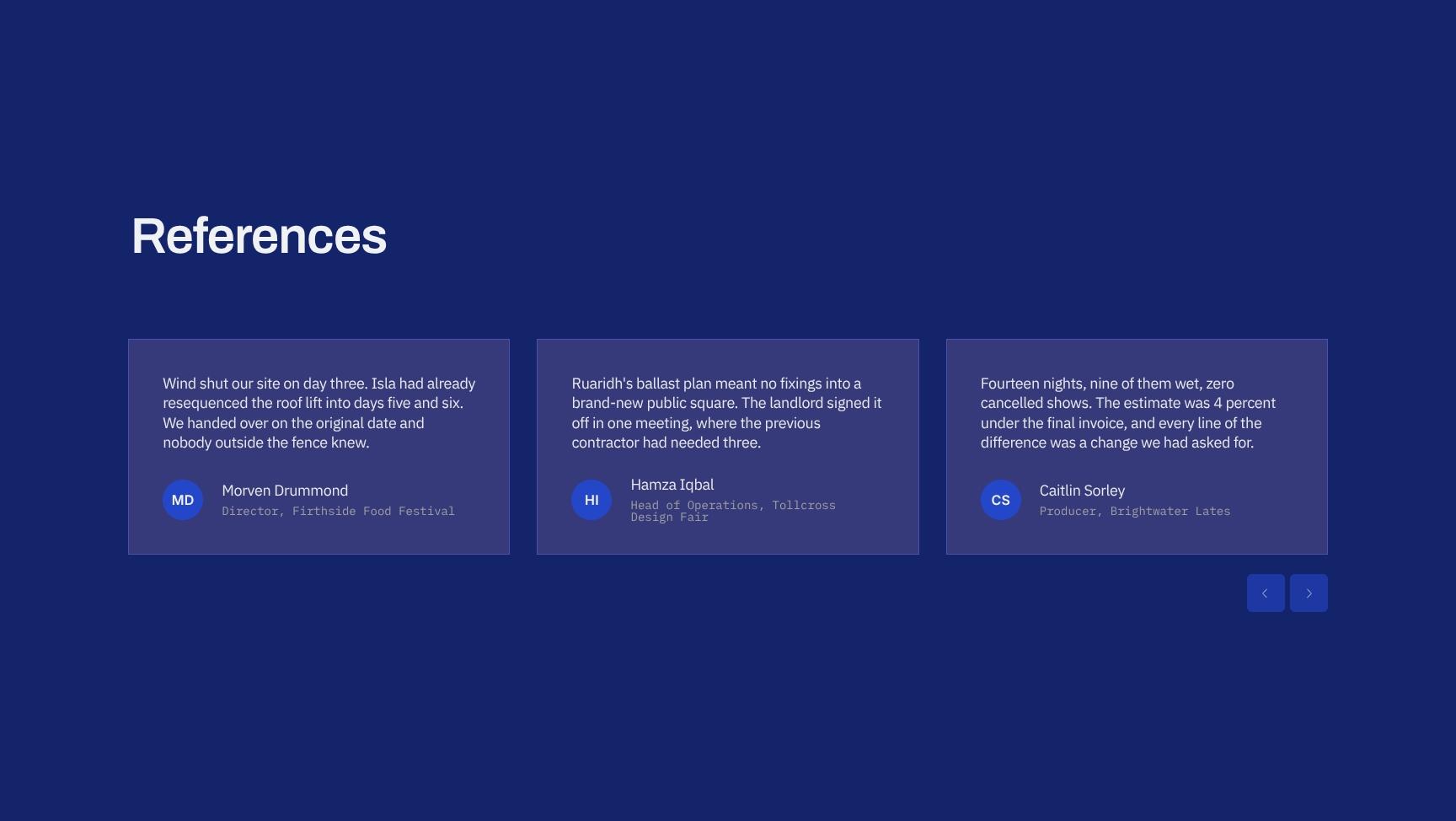
Client References and Testimonials
Real quotes from past clients, including a story of resequencing a roof lift around high winds and still handing over on time. Provides credible third-party proof of reliability under pressure.
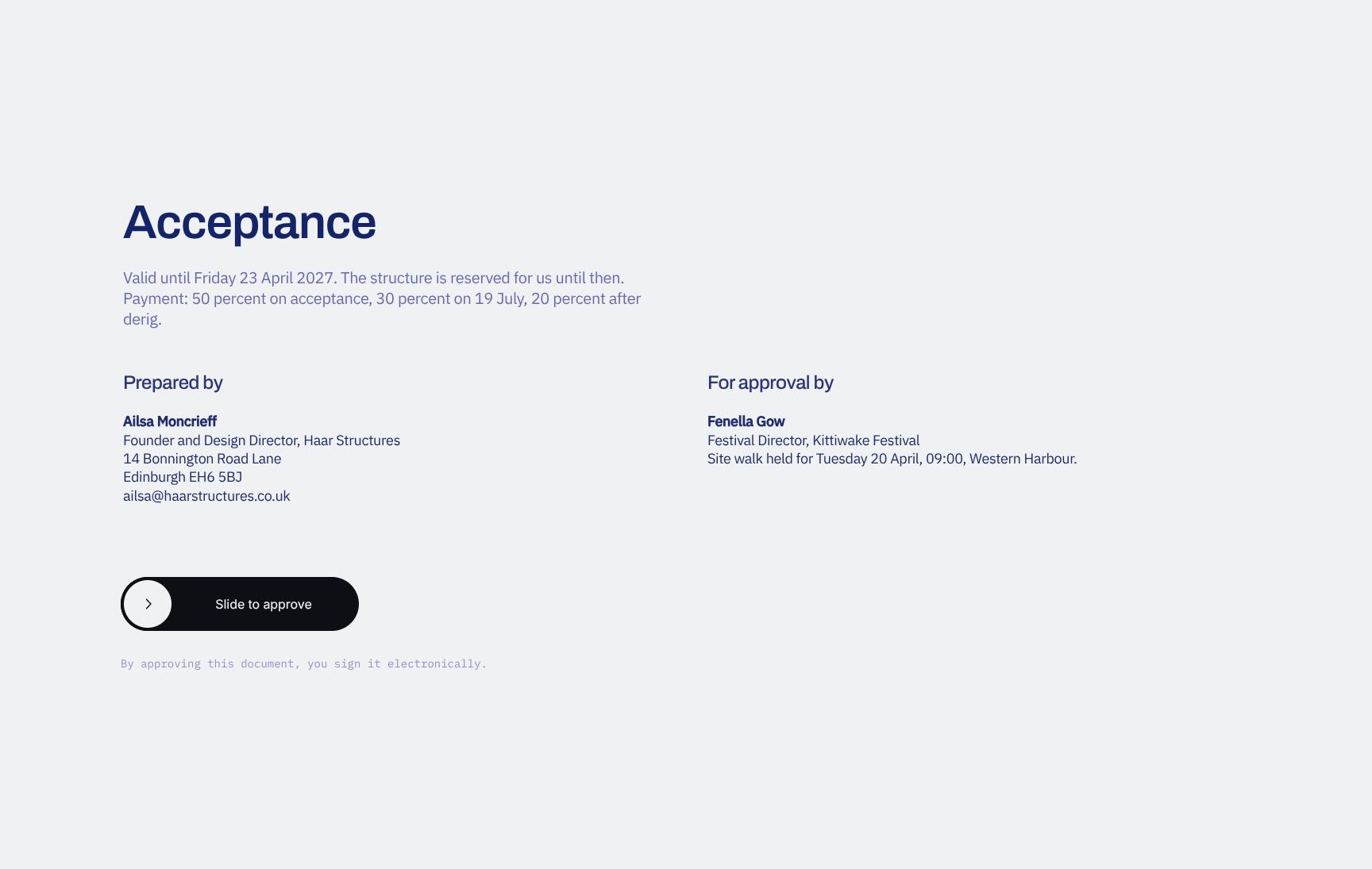
Acceptance Terms and Payment Schedule
States the offer is valid until Friday 23 April 2027, with the structure reserved until then, and a 50/30/20 payment schedule. Makes the next step clear and lets the client accept with confidence.
Find your answers
Answers to common questions about pricing, scoping, and presenting temporary venue builds to festival organisers and event producers.
A strong build proposal includes a cover page, a clear scope of work, the guiding principle or approach, a build sequence, past builds and team credentials, and a detailed estimate. Together these sections show clients what you will deliver, how you will deliver it, who will do the work, and what it will cost.
Replace the placeholder text in each section with your project details, starting with the cover and scope. Update the build sequence with your actual phases and timeline, add your own past builds and team bios, and adjust the estimate line items to match your pricing. You can also swap in your logo, brand colors, and fonts for a consistent look.
In the scope, list exactly what is included and excluded, using specific deliverables and measurable outcomes. In the build sequence, break the project into numbered phases with start and end dates, dependencies, and milestones. Plain language and short bullet points help clients quickly see what happens and when.
Yes. You can typically export the finished proposal as a PDF for sending to clients and as an editable Word or Google Docs file for further changes. PDF keeps formatting intact and is best for final delivery, while an editable format is ideal for collaboration and revisions.
Itemize labor, materials, subcontractors, permits, and a contingency allowance (commonly 5–15%) so clients see where costs come from. State whether pricing is fixed or time-and-materials, and include payment terms, assumptions, and how long the estimate is valid. Clear line items build trust and reduce pricing objections.
Browse more events & experiential templates
More proposal templates for builders, production crews, and contractors pitching to festival and event organisers.